













For high school athletes, the college recruiting process can feel overwhelming and mentally exhausting. It requires discipline, patience and intensity, but for those who persevere, the rewarding feeling of receiving an offer makes the long hours and uncertainty worthwhile.
College recruitment is a multi-year process where college coaches evaluate high school athletes in order to build their future athletic rosters. Most athletes begin this process during their freshman or sophomore year of high school because that is when they begin to decide whether or not they want to play their sport at the next level.
“[When] you first get into high school, that’s when things start really getting serious,” Justin Jones (12) said. “That’s when college starts getting brought up, and you need to start figuring out what you really want to do.”
At the National Collegiate Athletic Association (NCAA) Division I (DI) and Division II (DII) levels, recruiting rules limit early communication between college coaches and high school athletes. Coaches at those levels are not allowed to initiate personal contact with athletes until June 15th after the athlete’s sophomore year. Because of these regulations, players aiming for DI or DII programs often spend their first two years of high school focused on development before they can speak directly with college coaches. Meanwhile, coaches at other collegiate levels are able to communicate flexibly with underclassmen, allowing athletes to have additional time to build relationships with coaching staffs and learn more about different programs. Early conversations also give players a sense of what level they can realistically play at, based on the responses and interest that they receive from each program. If an athlete wants to play at the top level but is not prepared right out of high school, Junior Colleges (JUCO) are two-year schools where athletes can improve their athletic and academic abilities before moving to a higher-level program.
“[I want to play] JUCO so I can have all of my four years of eligibility,” Keon Fields (12) said.
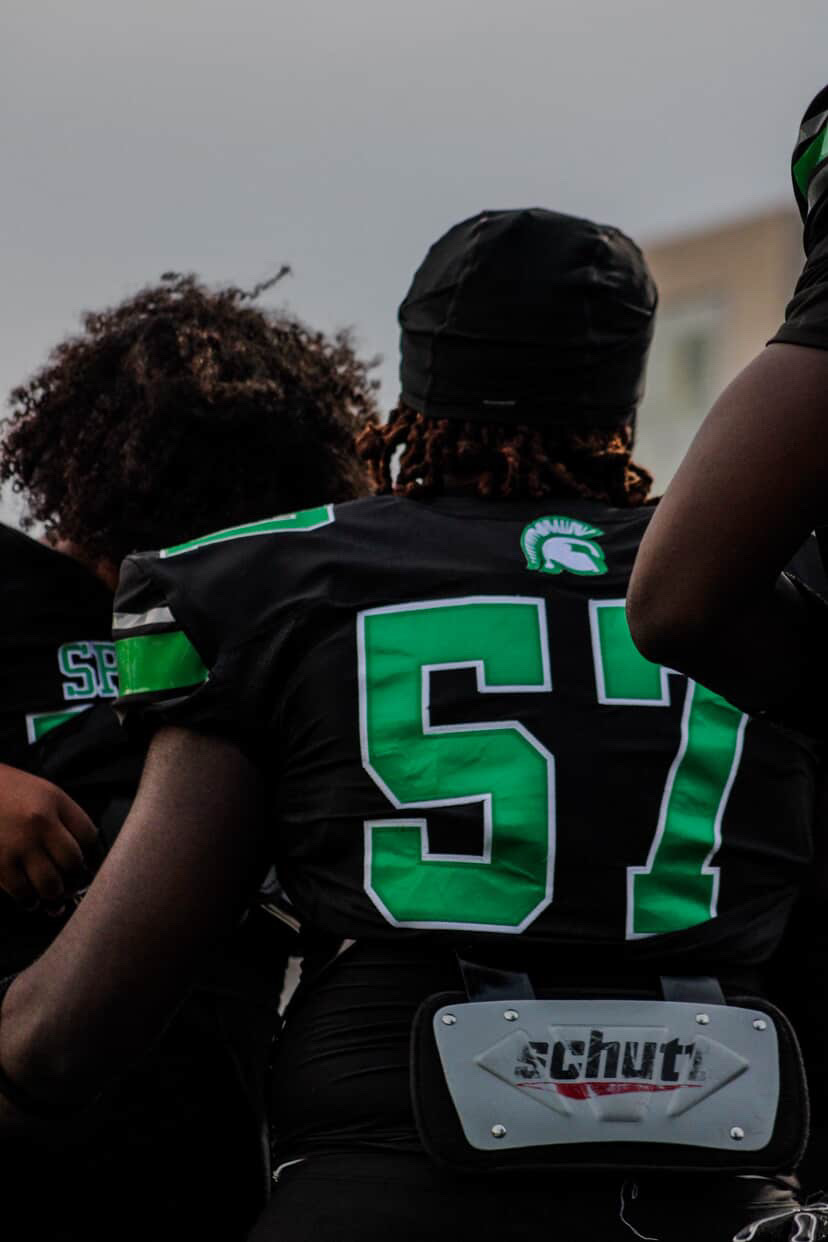
College athletics are extremely physically demanding, requiring athletes to spend hours training their speed, endurance and strength. Once players decide they want to play in college, their training style shifts.
“[When I realized I wanted to play football in college], I started taking the gym, the weight room and practice very, very serious[ly],” Fields said. “Basically, I just started going hard in my reps and [I] started doing more things to get my body right in shape.”
Alongside the excitement of receiving interest from college programs is the pressure on athletes to accept an early offer and commit to play at a school before they are ready, especially in the months following June 15th. It is imperative for athletes to be able to block out this outside pressure and take their time during the process. Going through their options steadily and with purpose will result in finding a better fitting program for them.
“You can’t rush into [the recruiting process],” Jones said. “You can’t make decisions out of instinct. You just gotta really just stay patient with it and then, take it seriously, because you can really do something with it.”
Although the recruiting process can test athletes mentally and physically, it ultimately shapes them outside of their sport. For those willing to trust the process, the reward is worth the wait. Jones, an offensive lineman for the White Station High School football team, is committed to play for Coffeyville Community College, while Fields, a linebacker, is still weighing his options for college and deciding which offer to accept.
“[There’s] gonna be a time when people don’t text you back,” Fields said. “Don’t give up on it, keep on trying. Eventually somebody[’s] gonna text you back … and when you get that shot, take it.”