











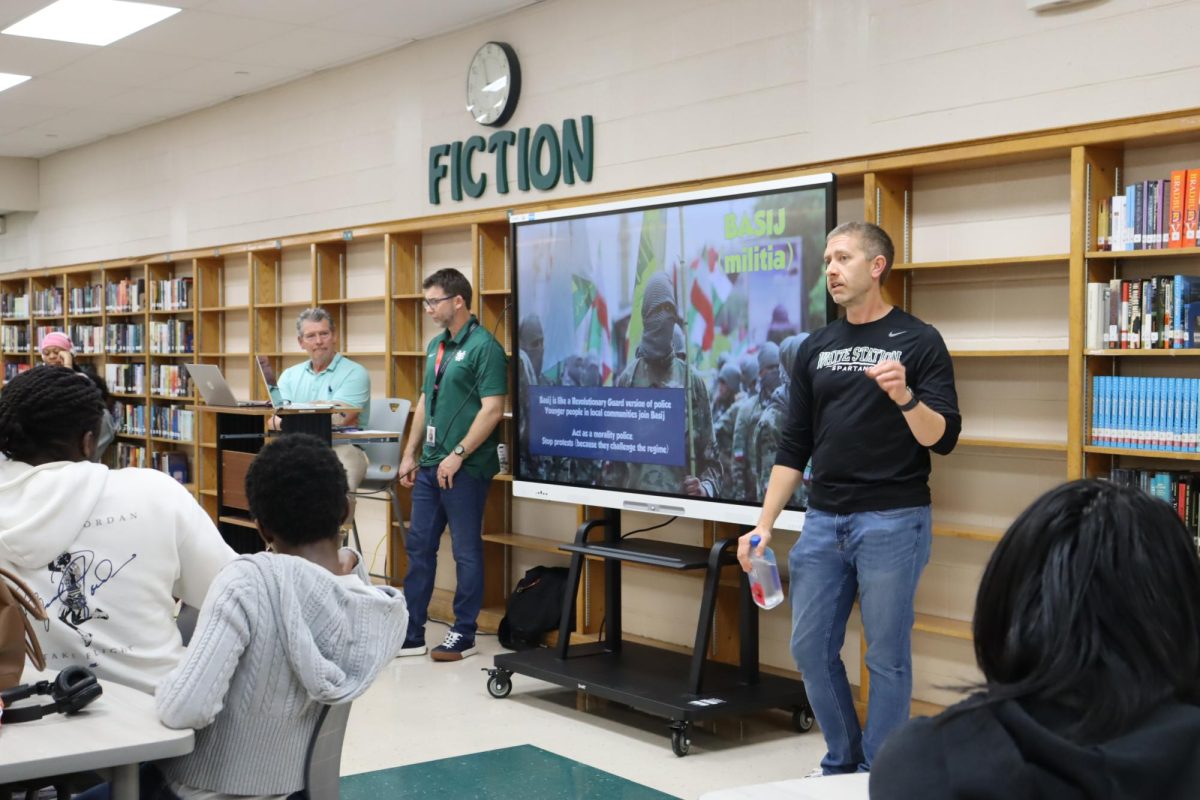







Every teacher has their own preferred teaching methods. Some like to lecture. Others use videos or presentations to explain topics. No matter what the teacher prefers, students must adapt in order to succeed in class. However, some White Station High School (WSHS) teachers have adopted a hands-on, student-led approach to teaching.
Two of these teachers are Kristi Wong and Katelyn Cherry-Marie who both noticed that when they lectured to students about complex topics such as Calculus or Anatomy and Physiology, students were often disengaged and struggled to understand the material. Wong noticed frequent cheating on assignments that indicated students weren’t trying or didn’t have the knowledge to complete homework assignments or tests. In the wake of these observations, she decided it was time to try a different strategy.
“In my pre-calculus class … there is a problem with taking knowledge learned from algebra, and then applying it,” Wong said. “Like if you don’t know what one-half squared is and you’re a senior in Precalculus, there’s an issue here. And it was not an insignificant number of students that were having trouble with that. I needed something different because cheating was just rampant. … So, if my goal as a teacher is for kids to understand more mathematics, at the end of the year than they do at the beginning, I was not doing my job.”
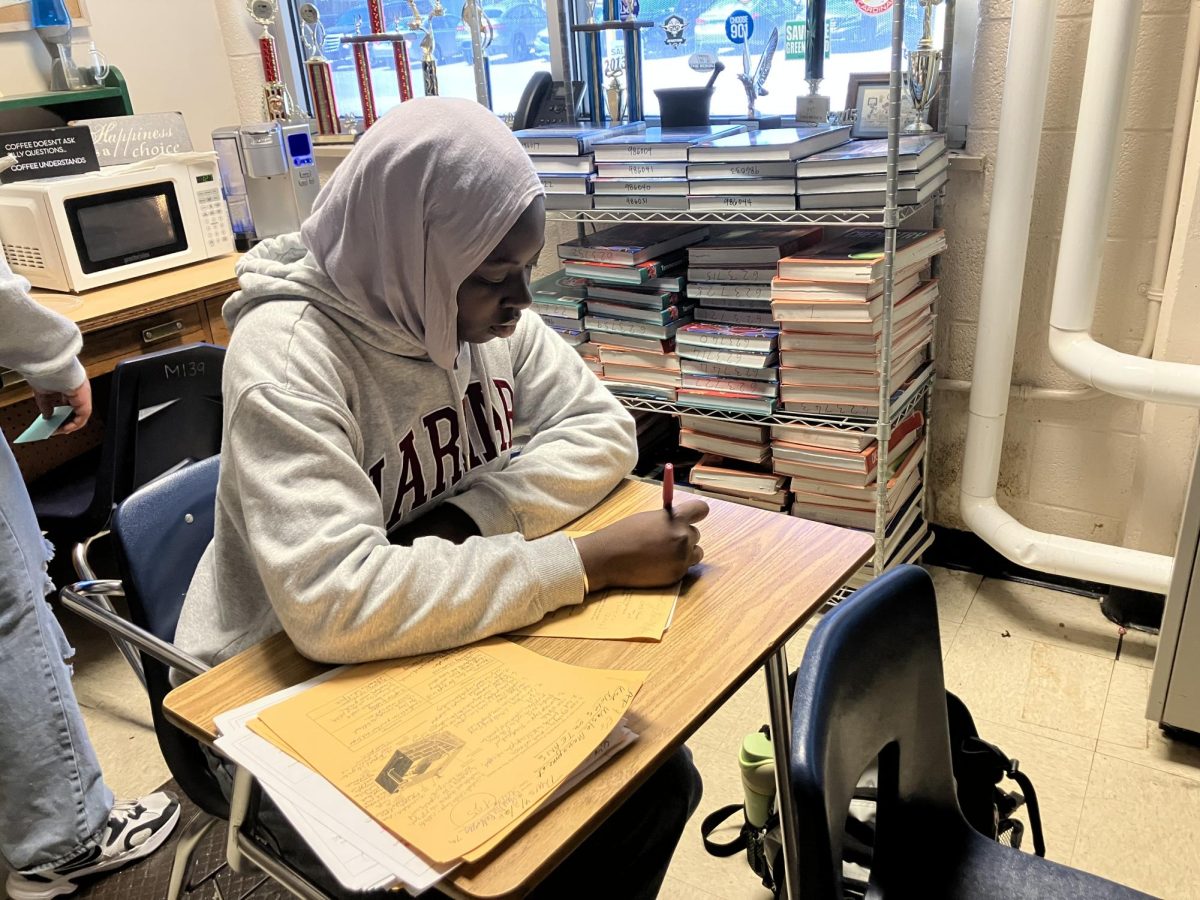
At one of the professional development sessions teachers are required to attend, Cherry-Marie and Wong were introduced to a different approach to teaching. Both teachers use a style that prioritizes student engagement and understanding with the teacher serving as a guiding hand rather than a pedagogical lecturer. So, students have more agency in their learning. Rather than requiring students to copy the teacher’s notes, Wong and Cherry-Marie encourage students to study and take notes in the way that they learn best.
“I’m trying to not give them things that they can just copy down,” Wong said. “[Because] I have realized that if I ask them to copy something down, they copy it and don’t think about it. So I want them to do their own notes, in their own voices [and] take what concepts they discovered — which I … formally state on the board, but I also say … ‘I’m not asking you to copy these ideas down … write your notes, as if you’re reminding yourself of how to do this in two weeks. It should be in your own language so that you understand it. And your notes might not look like your neighbor’s notes.’”
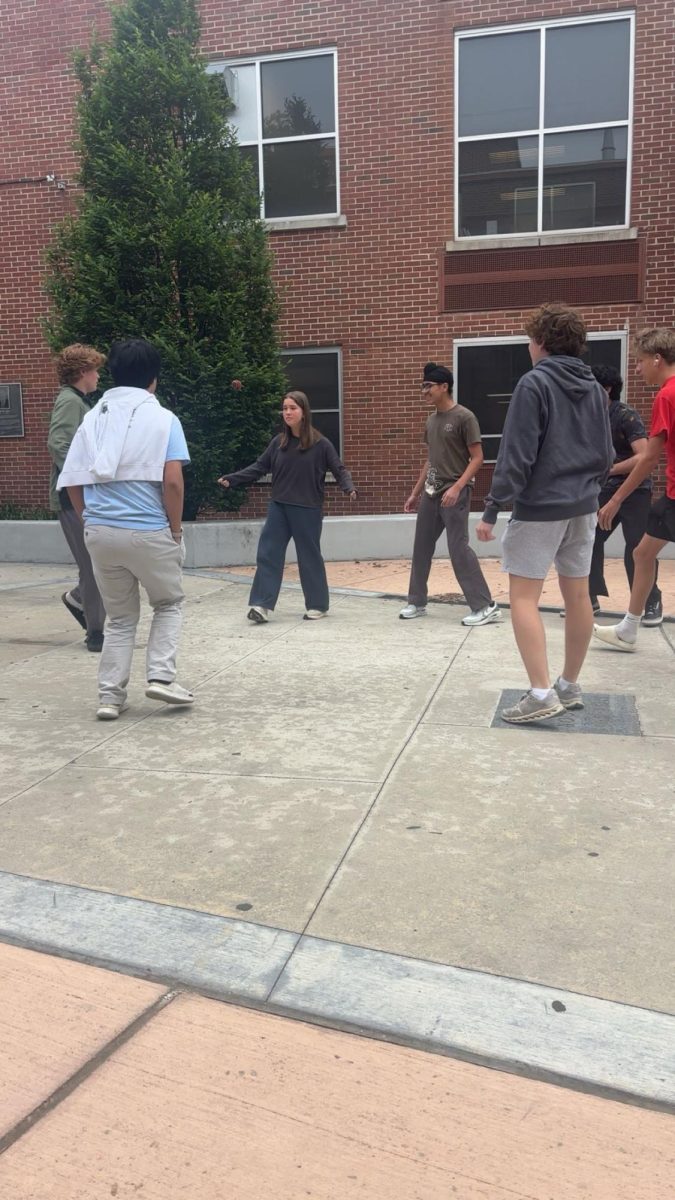
Wong and Cherry-Marie have adapted these ideas to their classrooms and coursework. Wong’s students use physical triangles so they can visualize and interact with concepts in Trigonometry. Or, in Anatomy and Physiology, Cherry-Marie’s students frequently work in groups to teach each other the material. The course is filled with a lot of complex medical terminology, so Cherry-Marie’s students play a “Heads Up!” style game where students must describe a medical term to another student who doesn’t know it. Throughout the learning process, teachers observe and check-in with students to judge understanding and answer questions.
“So, traditionally, it would have been I come in, do a bell ringer, [and] immediately go into lecture. ‘Do kids have questions? All right, here’s your assignment,’” Cherry-Marie said. “[Now, I] have them do lesson notes the night before or the nights before. So when they come in, instead of me getting up there and saying, ‘All right, here we go, here’s the lesson.’ It’s, ‘Hey, what did you learn about this?’ I don’t have to stand up there and go word for word … They’re able to tell me the information. We go through it together, we answer questions, and then the rest of the class period is all about them getting together, showing each other what they found, applying it to worksheets that they do, sketches that they draw and eventually adding that to quizzes and tests.”
Both teachers have found success since their recent switches in style. Wong and Cherry-Marie noticed that many students seemed more engaged and interested in class, and they understood the material more, something that’s reflected in improved scores on assignments and tests. Furthermore, with greater understanding, students feel more confident in class.
“A lot of the positive changes that I’ve seen are [that] students are leading more,” Cherry-Marie said. “They’re leading each other, they’re leading their groups and their tables. But they’re also gaining more confidence from it. Some of them are more … successful than others just because they are gaining all this knowledge about this topic and I’m seeing them open up in class about it. I’ll ask a question and [the] majority of them will raise their hand because they know it. Or they’ll just blurt it out, which is what I prefer in class. With that, I’ve seen improvement on the test grades. I’ve seen improvement [with] the group work in general. It’s not just one kid working. It’s multiple.”
With these new teaching styles, some students struggled to adjust and preferred other, more traditional teaching methods. On the other hand, some students who struggled in traditional lecture-style classes have enjoyed these changes and teachers have seen improvements in both students’ grades and their attitudes toward the class.
“I’ve had kids verbally say to me, ‘I love this. Like, it’s making me do work,’” Cherry-Marie said. “I’ve had some kids who … unfortunately, with Anatomy and Physiology, a lot of kids get dropped in this class. They don’t choose the class. So when they come here and they’ve been put into this new teaching environment and style of work, they kind of immediately give up … It’s hard. I think that as kids are continuing on [in my class], they’re realizing, ‘Oh, she’s set in this pathway. I’m gonna do the work. I’m gonna try harder.’”
Since student-led teaching hinges on students, the process of learning can be unpredictable, especially for students who are unfamiliar with such teaching methods. Should other teachers want to try this teaching style, they’d have to consider adjusting their lesson plans and adapting their pacing based on student progress. Wong noted that this slower teaching style probably would not work well for classes that rush to prepare students for End of Course (EOC) exams like Algebra I or Geometry.
“This is not other teachers’ failings, it’s the system,” Wong said. “The teachers are doing so much to get these kids to … pass these EOC tests … and it works. But it only works to get them to pass the test. It doesn’t work for necessarily understanding the subject matter, the concepts. I don’t actually see how an EOC teacher can do this [teaching style] … It takes time. Now, if this were the method of learning from middle school and then ninth grade and so on, yes, I think 10th and 11th grade EOC classes could handle it ’cause kids would already know how to problem solve, how to think critically.”
Since introducing these new teaching styles, both Wong and Cherry-Marie have noted what’s worked and what hasn’t with their new teaching style and have or are planning to make adjustments. There are setbacks as some students struggle to adjust to a style that differs from what they’ve traditionally experienced over a decade of learning, but both teachers have found that the benefits outweigh any difficulties and plan to continue using these teaching styles in the future. Aside from just learning the material, students also gain an understanding of the learning process and how they learn best, teaching skills that they can apply to many disciplines and carry into any post-secondary education.
“I do see more kids getting more excited about the activities we’re doing because, instead of me just standing up there and teaching, ‘Hey, here’s your assignment, here’s your homework,’ they’re able to talk together in class, get the information, show it to the class,” Cherry-Marie said. “I think a lot of kids are still struggling on opening up in class cause they don’t want to sound … dumb or they don’t want to become embarrassed by it. And I think this process has actually shown them everybody’s kind of learning the same stuff. Making you do it yourself shows you that you can learn it however you want.”