














Chaos. A fight breaks out in the middle of class. In another, a teacher’s anger reaches a rolling boil of book-throwing. But in another, students discuss the extent to which the Mongols impacted the making of the modern world or better yet, whether an object’s velocity is increasing or decreasing.
At White Station High School (WSHS), the day-to-day experience of every student is unique. But, it is especially different depending on whether one is enrolled in the optional program or the traditional program. Steven Williamson teaches traditional, honors and Advanced Placement (AP) World History and also attended WSHS.
“The saying was White Station is really two different schools, for better or for worse,” Williamson said. “You’ve got your traditional population and then you also have your honors and AP population. Students can have, depending on their grade level and the courses that they’re choosing to take, a very different experience.”
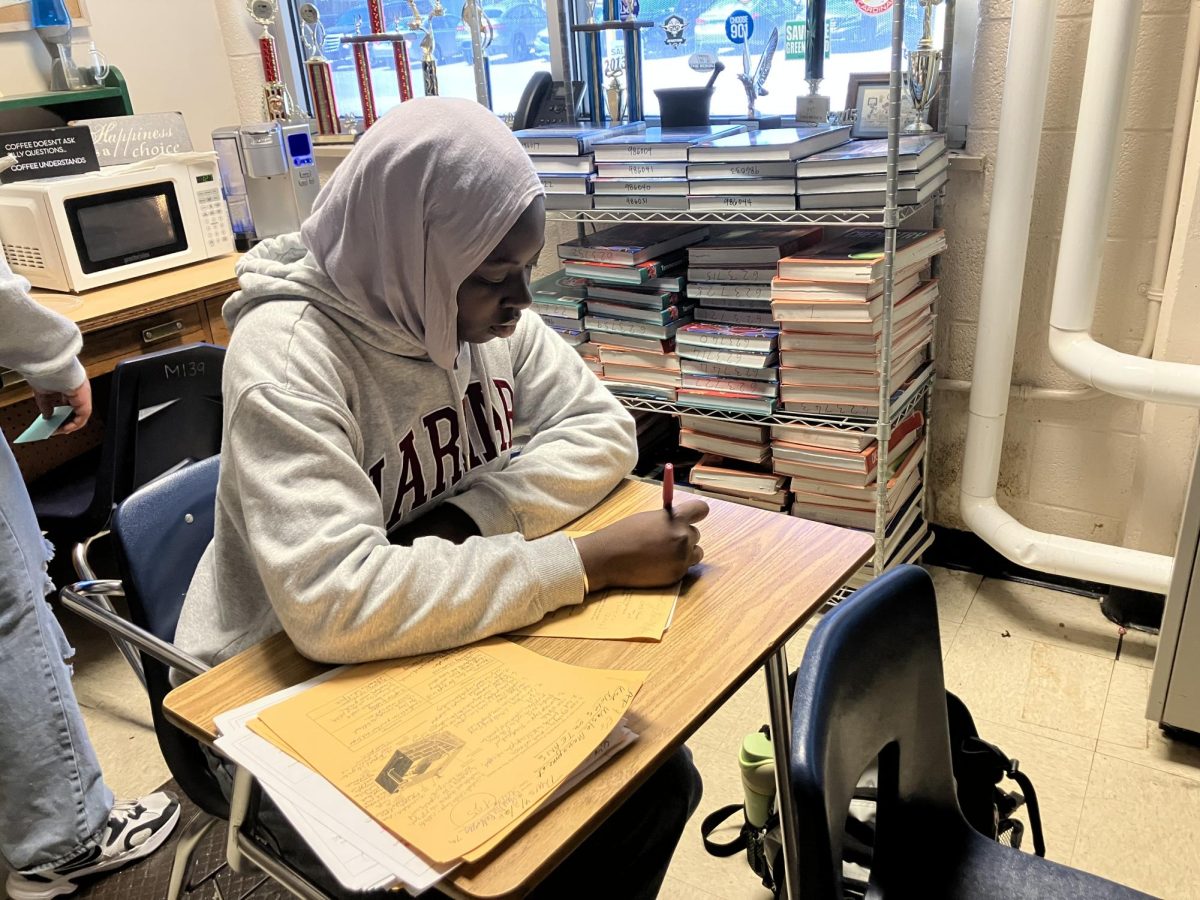
Although students often cite the difference in workload, with traditional classes having significantly less, the main difference is the behavior of the students in classrooms. Sometimes, in traditional classes, a student’s misbehavior can distract the entire class. Mattie Horton (10) was in exclusively traditional classes in middle school, but joined the optional program freshman year to be a little more challenged. She also wanted to be able to learn without distractions from other students.
“You tend to see a lot more people acting up in a traditional class than you do in an honors class,” Horton said. “I could tell sometimes … in a traditional class, I wasn’t getting … what the teacher was talking about because there were so many distractions … going to an honors class, it’s like I’m getting what I need to be getting every day.”
But the behavior of students isn’t just a distraction to other students — it can impact learning through its effect on teachers. Some teachers vary the effort they put into teaching depending on the type of class they have, often putting less effort into traditional classes because they feel students are not participating or striving to do better. For some, like Siham Badran (10), a traditional student who has had difficulty entering the optional program due to her homeschooling credits, this carelessness extends to negligence of important school policies like implementing the phone ban and even cheating.
“I noticed sometimes there would be students cheating and the traditional teachers, they wouldn’t really do anything about it,” Badran said. “They would actually make an excuse to get out of the room to do something so I guess they wouldn’t have to feel guilty about it, feeling guilty about knowing that their students are literally cheating on the test, because they’re like ‘Well, might as well, there’s no hope for them.’”
According to Williamson, these behavioral issues stem from many different factors, like being in a less rigorous academic setting earlier on in school where there was less emphasis on behavioral expectations and differing expectations at home from parents. Often at the root is students not being able to deal with social and cultural problems in a healthy way due to a lack of social emotional learning and thus expressing it through bad behavior or distraction, according to Williamson.
“If you’re in a negative headspace — this is for anyone, an emotionally mature person or not — if you’re in a negative headspace … you’re less likely to be involved in what the class is expecting of you because you are trying to figure something out,” Williamson said
Part of what led to Horton’s decision to switch to optional is having more autonomy over how she could learn and learning in depth. She recalls how she often wished she could do the projects or the books her friends in optional would be doing. In her classes, they would read shortened versions of books within two weeks with little to no related activities, but in her friends’ they would read full books, spend months on them and have multiple assignments and presentations related to the topic.
“[I feel like I missed out], especially [because] some of the things they would read or the projects they would do, ‘Well, that looks a lot more fun’ or it’s like, I’m kind of more of a visual learner, so when it’s a project and you’re hands on with it, that would have probably made a lot more sense in my head than having to hear the same thing over and over again,” Horton said.
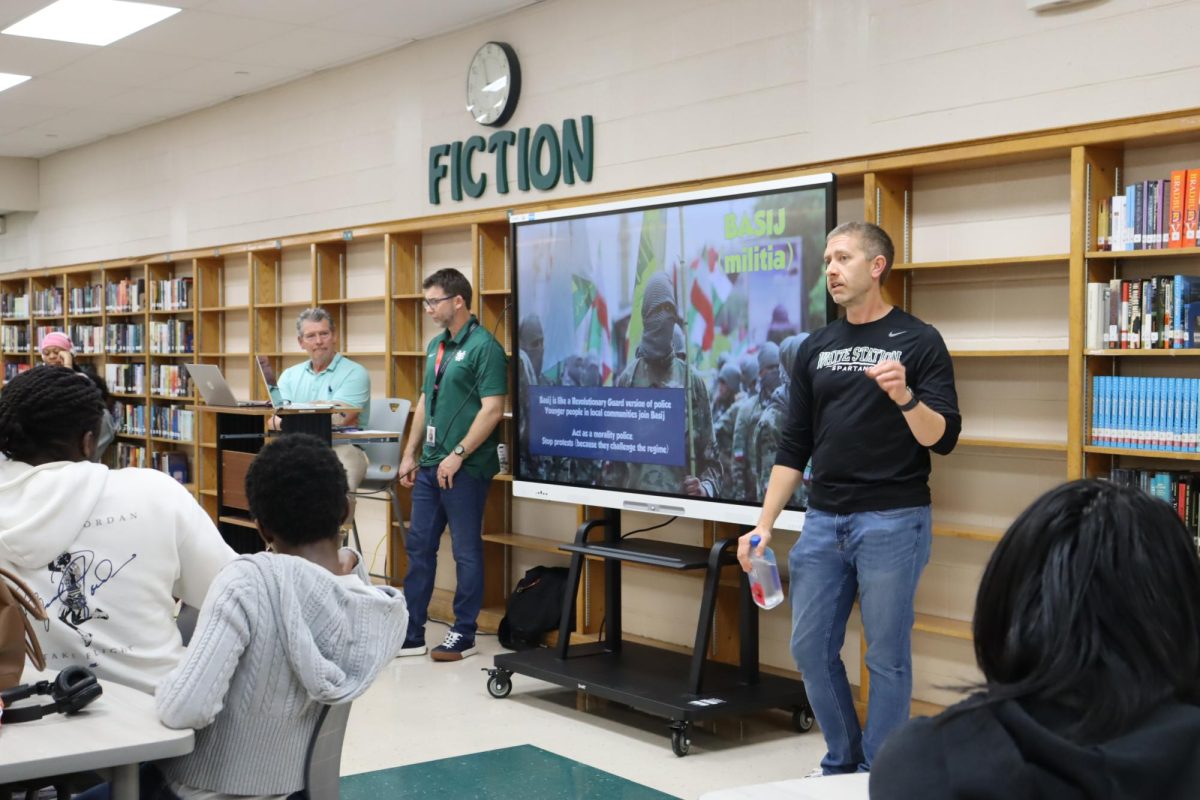
The difference in how Williamson approaches his classes, for example, is based on how much work students are willing to do. In his AP and honors class, class time is more student-led through discussions because students put in the work before class. In his traditional classes, much more of it has to be teacher-led because less students finish their homework consistently.
“So the expectations academically are very very similar; what I expect the students to do, what I expect the students to know is more or less the same in every class,” Williamson said. “How we go about learning … certain concepts is different because of the intrinsic motivation that a lot of my honor students have that my standard students … haven’t quite gotten that grasp yet.”
Some students who feel impacted by others’ behavior in class believe positive change to this problem can only be achieved if their peers’ behaviors are altered. For Williamson, having more guidance helps students.
“I think if they have more guidance from their teachers and from really everybody in the school about, ‘Hey, these classes are available. I think you can do the work. I’ve seen you do the work in your other classes … Hey, we’ve noticed this. Well, why don’t you try being an honors student for a year and see how you like [it],’” Williamson said.
Despite behavioral issues and other problems widening the difference between traditional and optional and the gap in learning, being in traditional classes does not inherently make a student a bad student or a disruptive one. It is often a very small number of students who impact classrooms negatively.
“I think we’re all [really] incredibly intelligent,” Williamson said. “I tell my kids all the time ‘you’re not stupid, you’re not dumb, but you have to put in the work to get the things that you want in life.’”