










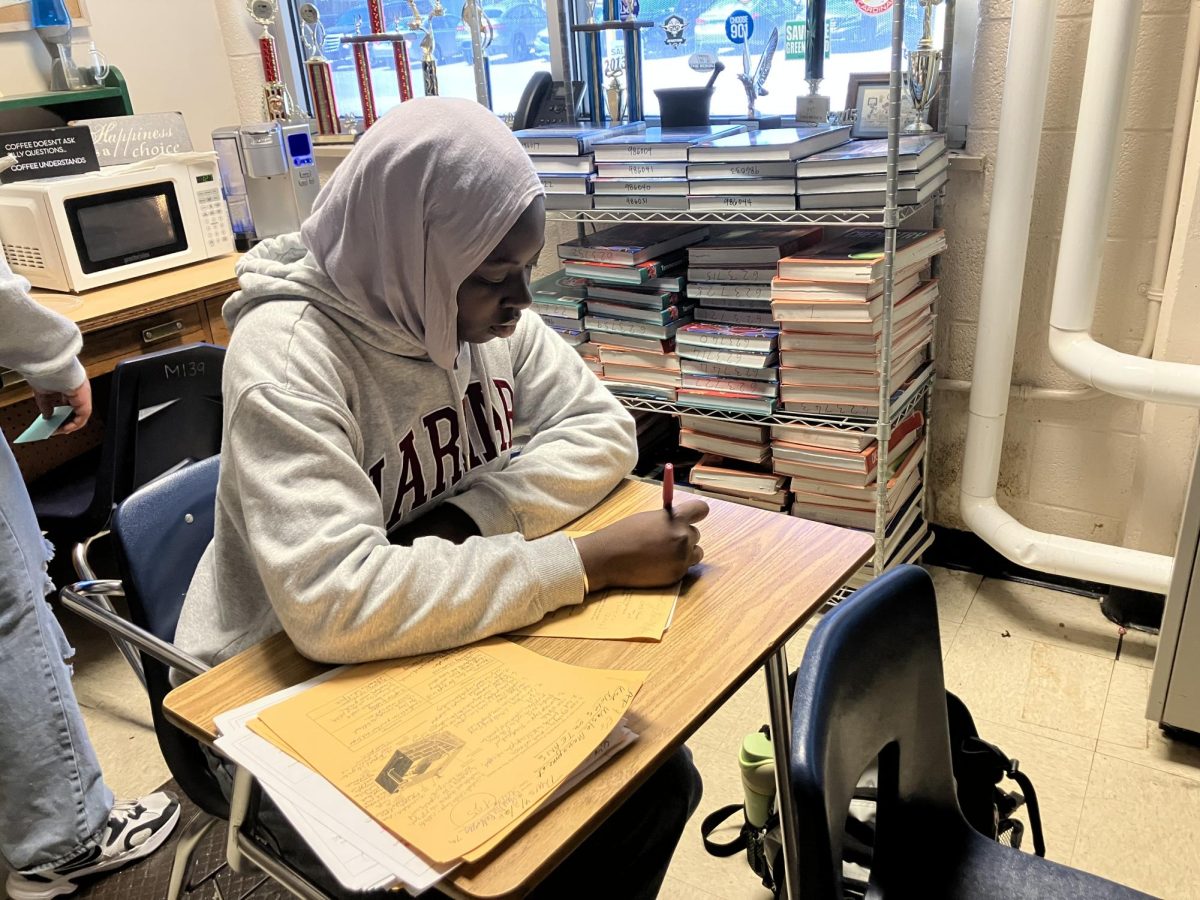










It’s a Tuesday after school. You receive a phone call from your dad and the worst has happened. This situation is how a former student at White Station High School (WSHS), who will be attributed as Source A due to privacy concerns, learned that her mother had been detained by U.S. Immigration and Customs Enforcement (ICE) in November. Her family’s asylum case was pending so they attended regular check-in appointments with immigration officials. Her mother was detained at one of these check-ins. Source A’s father waited outside of the appointment and after around five hours, the mother used her free call to tell him she was being moved to a detention center. As he informed Source A of her mother’s detention, Source A’s father presented her with the option to leave and live away from her mother for at least the next five years, or to return to their country to live with her mom.
“I was never separate [from] my mom,” Source A said. “We were together all the time, and leaving her for five years … [it would] be hard because I would be living alone in the U.S.”
The next day, her father, a permanent resident of the United States, was also sent to a detention center. He was held for three days. Source A said the situation with her dad was too stressful to even describe. She learned from her grandmother that her father was taken, and she lived with her grandmother while he was detained.
“I was feeling anxious and I didn’t know what to do because I have my brother, and I [didn’t] know how I needed to react with that,” Source A said. “We needed to move. It was too much going [on] at the same time.”
Source A was accepted into a top ten university. She gathered volunteer hours, wrote her personal statement and submitted applications. But even if she had stayed in the country, she would have little to no scholarship money because of her immigration status, which she needed to attend. Ultimately, Source A decided to leave the country.
“You [don’t] realize that you have [opportunities] until it’s gone … I didn’t fully understand what my opportunities [were] until this happened,” Source A said.
Source A spent the last week before winter break saying goodbye to friends and teachers and finalizing grades. In the meantime, she made sure not to leave her house unless she was going to school. Source A said her homesickness has not gone away since leaving the U.S.
“Before yesterday, I was crying because I really wanted to go back [to school],” Source A said.
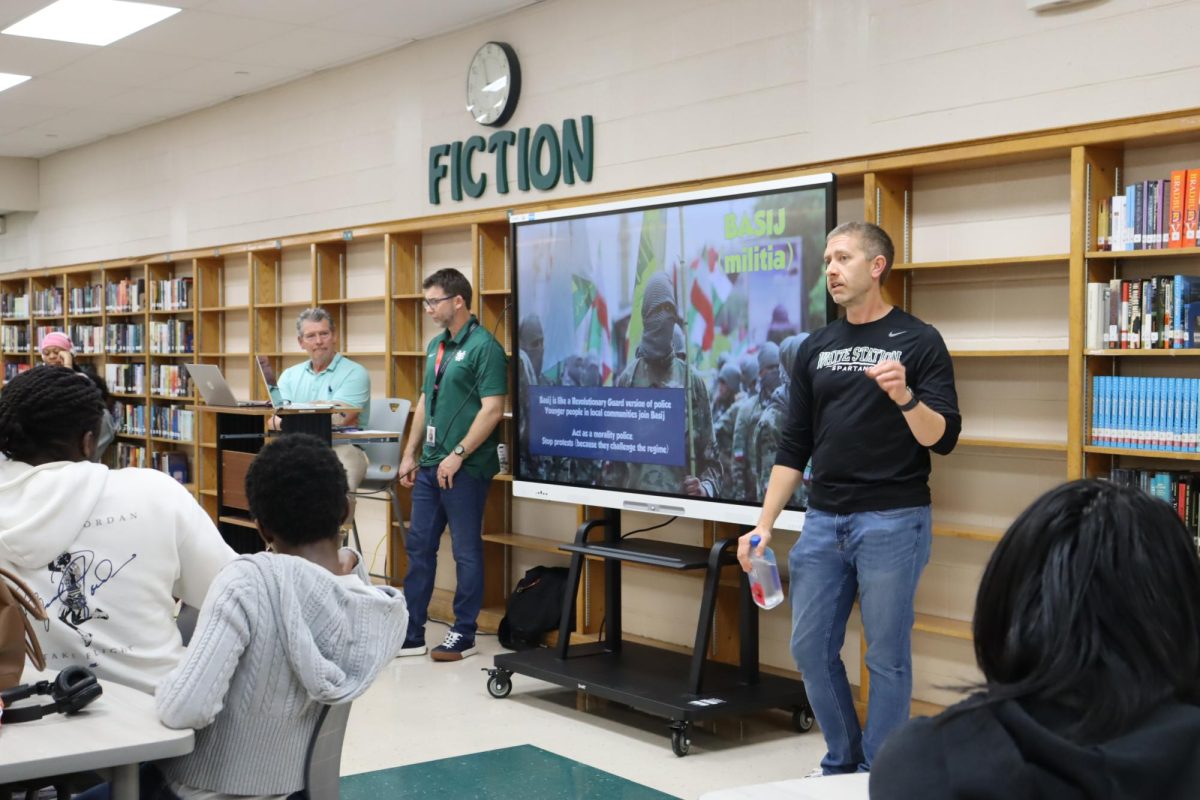
But there are likely more students like Source A at WSHS. Sarah Altareb is an English as a Second Language (ESL) teacher. She feels many of her students are impacted by ICE to some extent, but it’s difficult to know for sure because many are afraid to talk about it.
“And the sad thing is that no one knows, like we as Americans, we don’t know about their suffering,” Altareb said. “I mean, you probably know undocumented immigrants, but do you have a strong relationship to have a conversation about how they feel and how they [are]? Because they’re not very comfortable talking about it.”
The impact of ICE on students at WSHS and across the country goes beyond situations like Source A’s. The threat of ICE impacts students’ mental health and their overall stability. So far, Altareb has had two students tell her that their parents have been deported, but ICE comes up regularly in conversations in her classroom. Altareb recalled an incident where her students could not focus on their classwork because they had heard from friends that ICE was near WSHS. Administrators later confirmed there were no ICE agents, but only then were those students able to recenter their focus. Another student described to Altareb how her father takes a different route to work everyday and does not leave home after he has returned. Many other families are not able to complete daily tasks like buying groceries comfortably.
“They’re just living in fear and they’re trying not to be seen at all,” Altareb said. “They’re very, very careful outside and I feel like that’s a normal reaction, right? If you know that your future and your kid’s future can change in an instant, of course you’re going to be very careful. Of course you’re going to be very cautious and hypervigilant.”
But Altareb is sometimes placed in a position where she cannot help her students, like when students tell her about their legal concerns. Helping loved ones leave detention centers is a very complex process that requires specialized lawyers to work towards a bond and other issues.
“[Source A] was like, ‘I’m not going to stay in a country where I’m not welcomed … If they don’t want me, I don’t want to be here’ and that was very heartbreaking because I thought to myself, ‘We do want her,’” Altareb said.
What stands out the most to Altareb is how often those who are targeted are those with some form of documentation. But even more shocking to her is the lack of leniency.
“Anybody who gets caught, it’s over,” Altareb said. ”There’s no going back, and it’s a very complex process for them to get out of detention.”
Issues with ICE are continuing to escalate both in Memphis, Tennessee and across the country. Nationally and most recently, Alex Jeffrey Pretti was killed by ICE agents in Minneapolis on Saturday Jan. 24 as protests escalated over the killing of Renee Nicole Good, who ICE killed in Minneapolis on Jan. 7. The situation is ongoing and some details may have changed by the time this article is published. In Memphis, a vigil was held for Good on Jan. 8 and a protest occurred on Jan. 11, in which Tennessee Highway Patrol drove into the back of the crowd. There has been a large ICE presence in Memphis due to their deployment as part of Donald Trump’s Memphis Safe Task Force. Samuel First (12) attended the vigil for Good held in Memphis. Due to the number of attendees, he had to park half a mile away from the church it was held at. He was motivated to go after seeing the administration’s statement that Good attempted to drive over the ICE agents.
“I feel that the severity of the incident is in large part due to the neglect of the administration to handle this in a just and de-escalating manner … [JD Vance] said that [Good] put herself in this position,” First said.
Source A believes immigration enforcement is important and that it is understandable for government officials to work towards security but she also believes that current methods ICE employs are too harsh because they tear families apart. First shares similar sentiments on ICE’s methods.
“I’ve just been really disturbed by the violence with which ICE conducts themselves,” First said. “I think they really have become a militia of sorts.”
As of now, Source A’s mother has just been released from detention after over three months at three different detention centers. Source A was in contact with her mother through phone calls, but according to Source A, the price of calling internationally increased from $1.20 per minute to $3.33 per minute. It is unclear whether this was due to a change in the facility she was being detained in or other factors. The Scroll was unable to independently verify these rates. Although she has left the U.S., Source A has been intensively studying to catch up to take the college entrance exam in her country, while also working part time. What gives her hope is that the U.S. is not the only country where she can find opportunity. Still, she wishes for more empathy in the U.S.
“We are not bad people doing this — we’re working hard to be someone in life,” Source A said.