












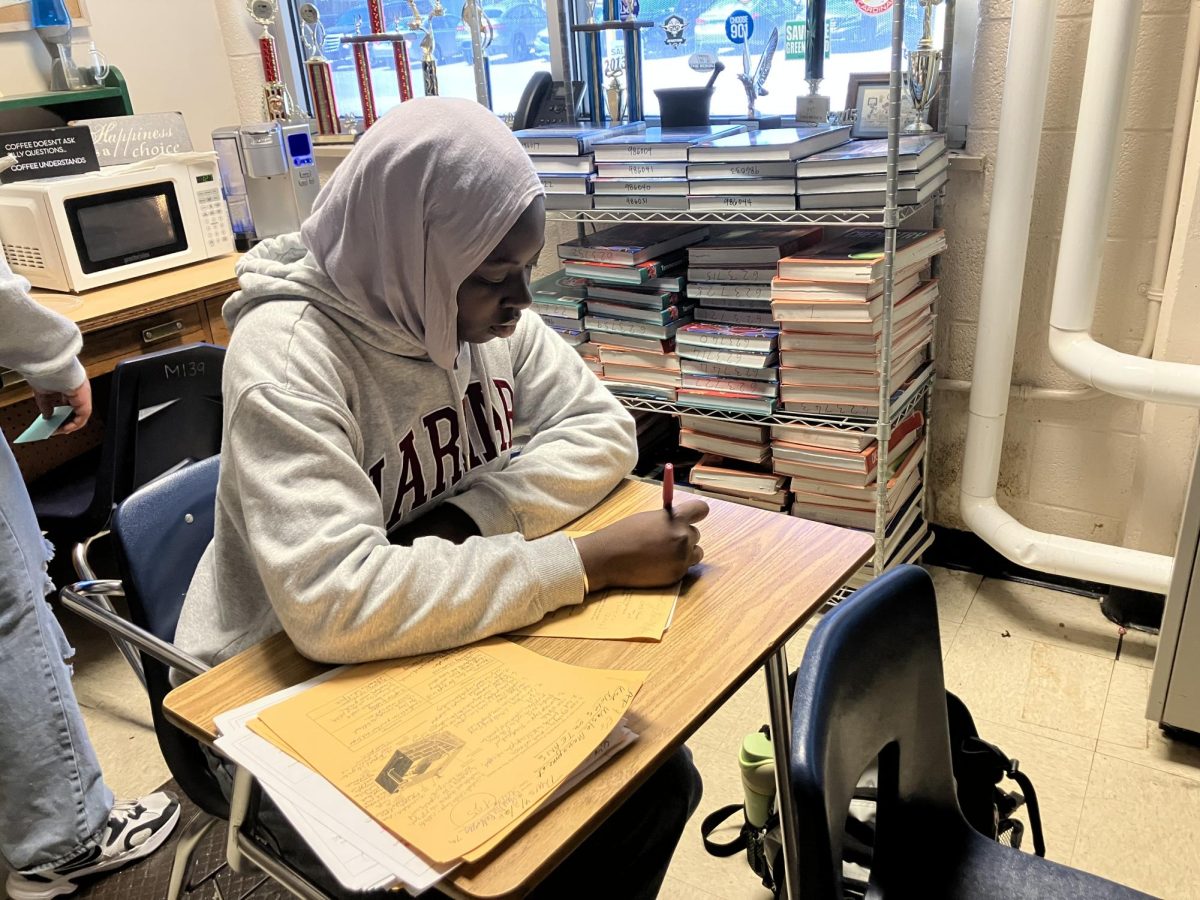
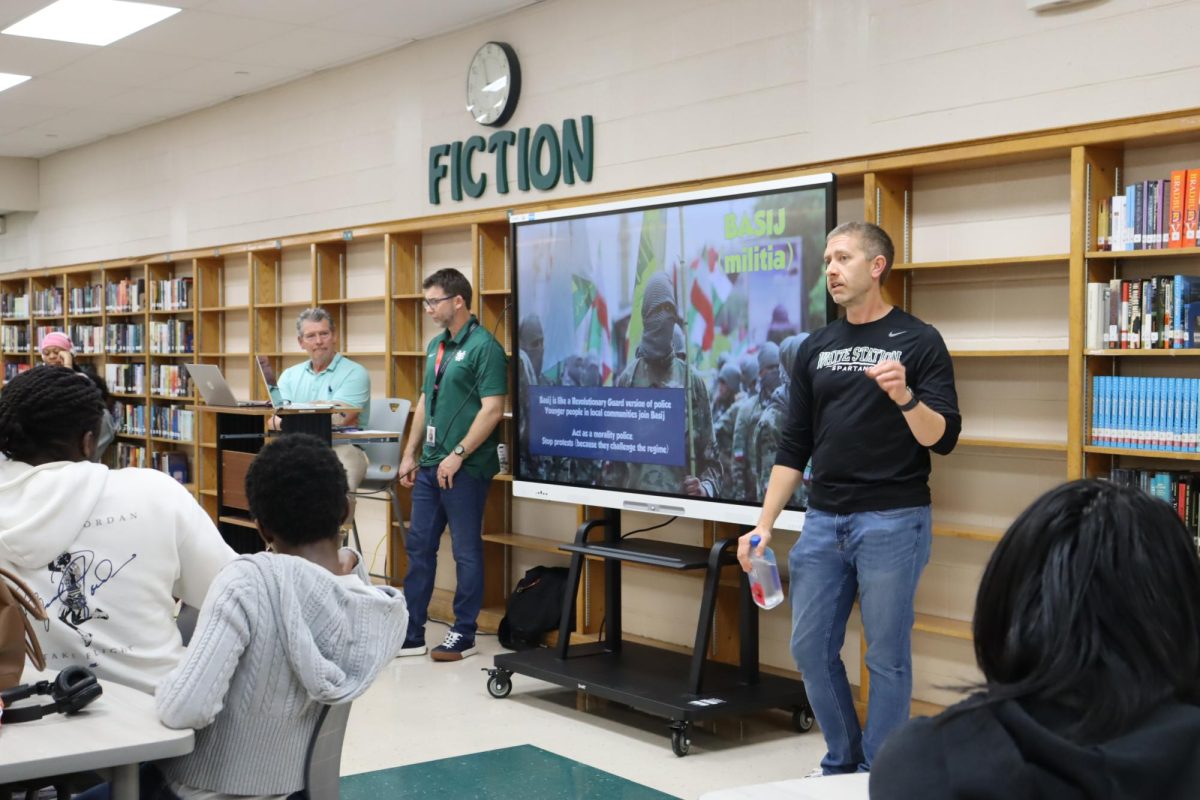










What do they do? What are they after? How will it affect me? Questions surrounding the Memphis Safe Task Force are still left unanswered for many Memphians including White Station High School (WSHS) students and teachers. Erika Sugarmon is a U.S. government teacher at WSHS but she is also a Shelby County Commissioner for District 12. She recently co-sponsored a resolution urging Governor Bill Lee to divert the money going towards the Task Force to essential services.
“[The National Guard is] a smokescreen for the federal agencies that are coming so everybody’s paying attention to the National Guard. You know … for ICE, DEA, FBI — all the other federal agencies to come in … what are they really here for?,” Sugarmon said. “It’s never been really explained. Crime is at a 25-year low in Memphis and Shelby County. And so what is the real goal? Is it just to incarcerate, harass, or to terrorize individuals? And then what’s the end goal, and how long are they going to be here? And things like that have never been told to any of the local elected officials.”
In mid-September, President Trump announced that Memphis would be the next city to deploy the National Guard as part of his anti-crime initiative and the Memphis Safe Task Force was outlined. On September 29th, federal agents from 14 different agencies arrived in Memphis and began operations and in October, the National Guard was deployed. As of November 19th, according to the Daily Memphian, there are more than 850 National Guard personnel and as of November 22nd, the Task Force has made nearly 3,000 arrests. The situation is rapidly changing and some details may have changed since the release of this article. Regarding MSCS, a resolution was passed during a school board meeting on October 28th for an emergency plan and expanded bus services to help students get to school safely, which would allow interim superintendent Roderick Richmond to develop a plan to expand bus service eligibility to students who live in established parent-responsibility zones. However, uncertainty continues for students especially in regards to ICE and their impact on schools. Joshua Salazar (11) is part of Facing History and frequently researches the current situation.
“If it gets too bad … I feel like some public schools might see less people coming in out of fear of being stopped for immigration or something … that’s a big worry for a lot of people,” Salazar said. “Just being racially profiled and being detained. I don’t know, I just feel it would make school not feel safe anymore.”
For many, like Sugarmon, the presence of the National Guard is not seen as a measure of safety, but rather one for the sole purpose of control, specifically involving undocumented immigrants. Doug Insch is a Spanish teacher at WSHS but before he was part of the Peace Corps in Guatemala and helped asylum seekers find sanctuary in the U.S.
“They’ve got any federal enforcement agency involved in picking up undocumented immigrants and they’re not just doing that, but they’re picking up citizens and detaining citizens … on the basis of their skin color … That’s what this is about,” Insch said. “It’s not about getting the worst of the worst. It’s about getting rid of people who have immigrated to this country … It’s about intimidation, it’s about fear, and it’s about getting people used to military personnel on city streets.”
In September, the Supreme Court signaled its support for ICE’s continued use of racial profiling in immigration policing in the case of Noem v. Vazquez Perdomo. To Salazar, this support signals the priorities of the Task Force here in Memphis.
“Most of the places that I’ve seen being heavily targeted by the National Guard, State Troopers, HSI … it’s places where racial minorities are centered,” Salazar said.
One of the greatest concerns surrounding ICE deportations nation-wide is the disregard of due process and how it could affect and set precedent for the disregard of fundamental rights.
“Just because you don’t necessarily agree with directly what’s going on, and you shouldn’t just be silenced. I feel like that’s just the foundation of the country, being able to speak your mind, being able to be free,” Salazar said. “Be justly [tried]. Not just be tossed in a cell just because … the second you take due process from one person, you can take it away from anyone”
In Salazar’s opinion, all people should have empathy and act rather than being bystanders when others are in need. For him, it’s important to simply help others but people should also consider that they may be impacted ultimately.
“Just because you’re not affected, that shouldn’t deter you from acting on it. I think … Being human is enough reason to act on it,” Salazar said. “I feel like we just, as humans, have to protect one another, or else we’re just gonna fall apart again.”
Although the main concern for many is increased ICE activity, the impact of the Task Force extends beyond, like its impact on Memphis and Shelby County’s taxpayers. According to Sugarmon, Shelby County has not raised property taxes in 20 years despite the fact prices have risen which leaves the county in a dire financial situation further exacerbated by the Task Force.
“We’ve asked, you know, ‘what is your intention, how are you going to be here,’ things of that nature, and we haven’t gotten any information,” Sugarmon said. “All they say is cooperate, cooperate. The city of Memphis received $100 million for their expenses, but the county has not received anything, and it’s going to cost taxpayers.”
For others, like Insch, the situation is unexpected because it is unprecedented. This makes its consequences difficult to grapple with.
“I’ve never seen anything like this in all my life, 71 years old,” Insch said. “My entire life I’ve never seen anything like this and it is not in the Constitution that the military enforces civil laws, … unless we’re at war as a country, and there’s an invasion, unless there’s a serious, serious insurrection going on and that’s not happening.”
Insch is also a regular attendee of many No Kings rallies and Freethe901 protests, which is the leading organization taking action against the presence of the Task Force. That passion was started by his parents, who both served in World War II.
“One of the strongest motivations for me to get into human rights or support human rights was the Holocaust in World War II,” Insch said. “That moved me more than anything … My parents exposed me to that. They made me well aware of what had happened during World War II … Everybody in my family served in World War II … That was a big deal, World War II and fighting fascism and fighting the Nazis and now, where are [the Nazis]?”
Some, like Sugarmon, fear the possible reaction to the Task Force. She recommends people and especially students are mindful of how they approach National Guard personnel and remember that they should not be considered targets.
“When things escalate and people are afraid, fear does a lot of things to people. But if they put themselves in harm’s way, you have federal agents, you know, especially if you have a president that cites insurrection, then you know, he can say kill and he has absolute immunity,” Sugarmon said.
But Johnathan Sullivan (12) believes the crime in Memphis is the greatest concern and the Task Force could be a way of helping Memphis and that police officers and other forms of law enforcement should be recognized and acknowledged and not feared in the way they are currently. Sullivan has several family members who are part of law enforcement.
“I think it’s important that we acknowledge and do something about the bad people that are out there, especially when you’re a police officer that holds people’s lives in your hands,” Sullivan said.” But we also need to acknowledge and recognize the hundreds of people that are actually doing their jobs protecting and serving, and how people look at them differently and mistreat them when they’re just trying to protect everyone because you have a couple of people in the world that don’t know what they’re doing. And they don’t do what they should be doing and have too much power.”
Many students like Sullivan feel that the presence of the Task Force is negligible for the average person. He says the Task Force is not a cause of concern for him.
“I know that I’m a law-abiding citizen,” Sullivan said. “I know that my entire family are all law-abiding citizens. And if [the] National Guard is full of people that are actually doing their jobs and looking for criminals that are doing things illegally and things they shouldn’t be doing, then I have nothing to worry about because I’m doing what I should be or what I’m allowed to under the rule of law and under the rules I live under. So, it doesn’t really affect me in any way.”
Some teachers have given their practical advice to keep in mind, especially as youth. Sugarmon’s advice is to know you always have the right to remain silent but also recommends being critical of the news you receive.
“Be critical. Look at all the information out there with [a] critical lens, because there’s a lot of misinformation or lying going on in the news media, and in social media,” Sugarmon said. “So, you know, verify, verify, verify, and look at the source.”