
















Remnants of the traditions of ancient Greece and Rome linger in the present. From the roots of English and other languages to mythology to the systems of government that exist today, much of the present is based on the traditions of the past. The study of ancient Greek and Roman is called classical studies or classics, and the Latin club celebrates this past at an annual festival.
The Latin Fall Festivus, or simply Festivus, is an annual festival celebrating classical studies. Though Latin is in the name, the event honors aspects of both Greek and Roman mythology and history. Festivus is a Memphis tradition that began in 2008 and typically occurs in November, inviting Latin clubs from schools all over the city, public and private. Students from grades K-12 are welcome, whether they are beginner Latin students or have been studying the language for years, to celebrate classical mythology and history through a variety of competitions.
“[Festivus is] chaos,” Michael Garcia, Latin teacher and Latin club sponsor, said. “There are various competitions, both academic, artistic and athletic. So all the students have to take a test, a very carefully designed test that should work for students of any level of Latin, but then there are further competitions: artistic and dramatic. There’s a costume contest … In keeping with the name of the festival, there is airing of grievances and feats of strength.”
As is appropriate for a Latin convention, the competitions at Festivus are themed around Roman history or classical mythology. There’s a jeopardy-style competition about Latin and Roman history called Certamen, a costume contest that often features gods from Greek myth, a chariot race and more. Members of the Latin Club are able to participate in or spectate any competition, while Garcia typically serves as a judge.
“Every year [I’ve attended] Festivus, I’ve done the costume contest,” Elena Martines (11) said. “[For the] costume contests you have to do a lot of research into your character. [My] first year, I did Ares, God of War, and I saw that … the costume had to be mainly handmade, so I went to the Dollar Tree and I bought cardboard stock, and I just started painting. So my first costume was held up with duct tape and cardboard.”
Latin club leadership hold meetings leading up the Festivus informing club members on the different events and encouraging them to participate. Artistic competitions, like the costume contest or Latin meme contest require that entries be created in advance. Other meetings may focus on a particular competition, such as the ancient Roman ball game, Trigon.
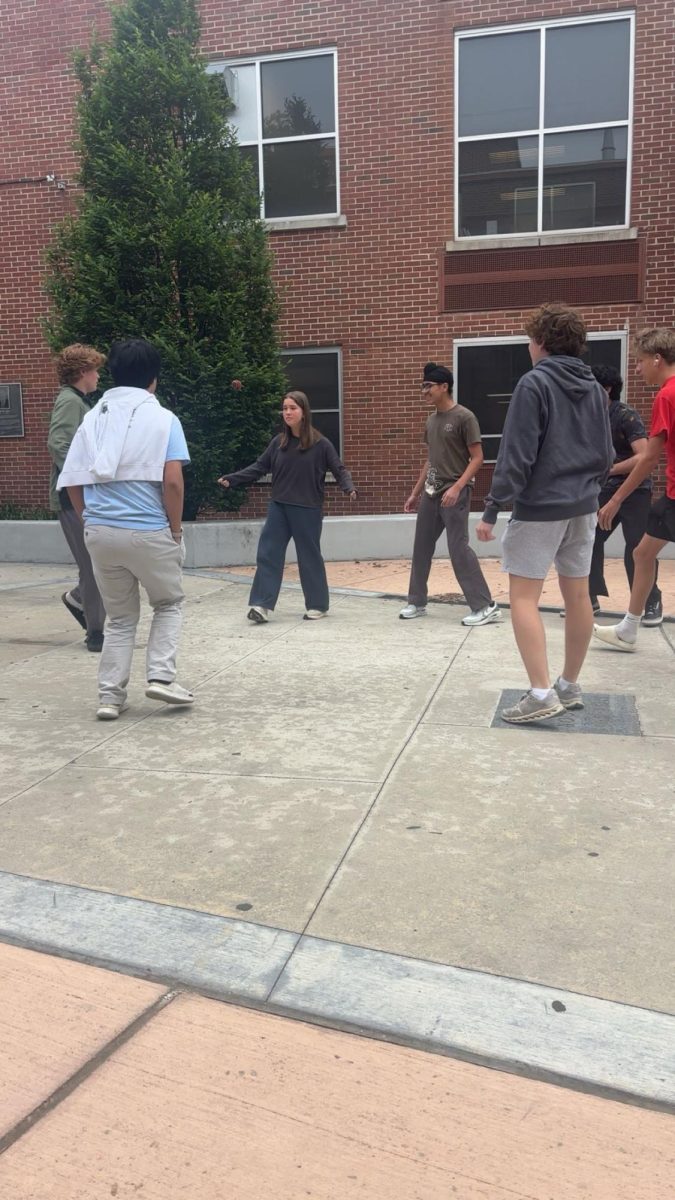
“We had many meetings preparing us for [Festivus],” Nolan Wright (12) said. “We had one meeting where we played a game called Ludi Trigon. It’s a pretty fun game … You have three people standing in an equilateral triangle. You catch the ball with your non-dominant hand, and you have to throw with your dominant [hand]. And there are a bunch of rules behind it, but we have fun playing that … game every year. We also do other things, such as we had a meeting this year specifically for making Latin memes and also making postcards. That was for the … [Latin] Holiday card competition and the Latin meme competition.”
Festivus is hosted at participating schools, changing each year. In the past few years, Festivus was mostly hosted at Memphis University School (MUS), but in 2024 it was hosted at White Station High School for the first time since 2015. This offered students a unique experience as not only were they competitors, but also tour guides, directing students from other schools to competition locations or bathrooms.
“[The year WSHS hosted], I had come late that day,” Martines said. “So I didn’t participate in [any competitions], but I did do a lot of watching. … I helped … set up some of the games outside … and I led people around. Some of the girls from St. Mary’s [Episcopal School] … when they came to White Station, they were also incredibly sweet. They would politely ask [for] instructions and all. They were very awesome, and [students from MUS] — my God, they’re so loud. But it’s a good kind of loud. They bring a lot of spirit to Festivus, definitely. They are the bigger group, too, so they also win [the] majority of almost everything. But it’s cool. It’s nice having that energy around.”
While Festivus is a local festival, the Tennessee Junior Classical League (TJCL) promotes classical studies to middle and high school students across the state. The location of TJCL rotates, but it was held in Memphis two years ago, making it more accessible to students. TJCL is a much larger convention that has students from across the state and a wider variety of competitions.
“I’ve also been to a TJCL, which is the all of Tennessee [competition], when it was held in Memphis two years ago,” Wright said. “It has the same types of competitions, but there’s more, and it’s a lot more.”
Students who enjoy mythology or are interested in attending Festivus need only join the Latin Club. An in-depth knowledge of Latin or classical studies isn’t necessary — only a willingness to learn.
“If anyone is interested in, like, just mythology or anything, they should definitely join Latin club so they can get to experience these kinds of events,” Martines said. “I feel like lots of people would love the energy that comes there, ’cause you don’t have to speak Latin in order to do most of these things. Like the costume contest, you just have to know mythology, the feats of strength — that’s athleticism. So people can do those too. And Certamen well, there [are] some questions [from] I think Latin one, [but] it’s just mythology questions, majority of the time.”
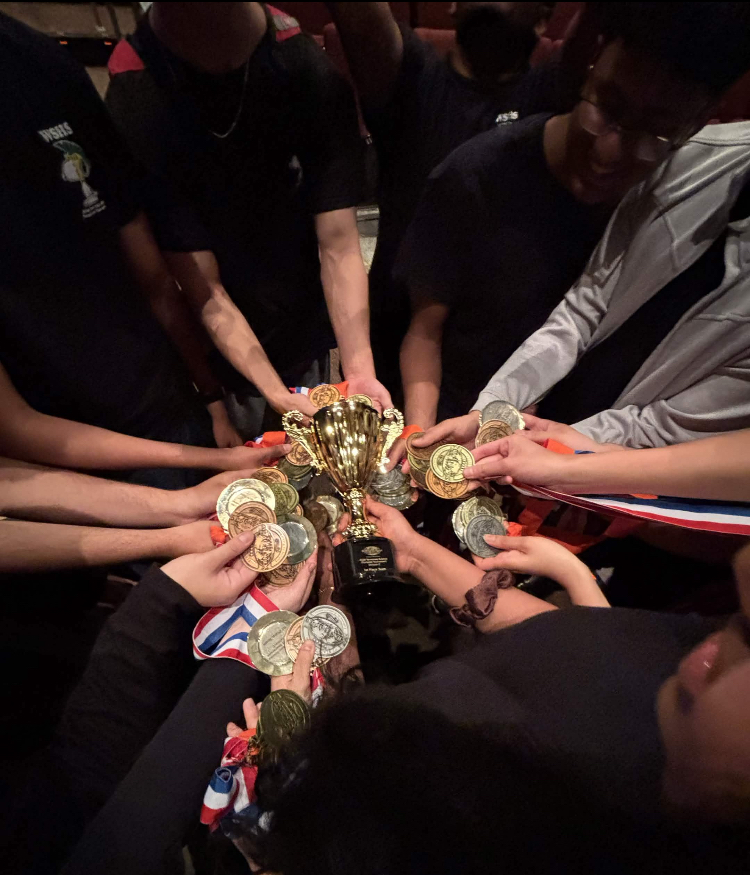
There are many potential benefits for students who attend Festivus. It allows students to brush up on their classical studies and meet students from across the city who are also interested in Latin. The friendships formed while preparing for or at the convention are what draw many students to return each year. Students also have the opportunity to take home prizes, including a bobblehead trophy, if they do well in competitions.
“[Festivus is] a lot of fun,” Garcia said. “White Station has always had a good presence there, especially [considering] schools like Hutchison and MUS, all their students have to take Latin and they always bring a large contingent, but I’m quite proud that White Station, a public school, has always had a good representation there as well. And the students always have a good time. And we always come home with ribbons and trophies.”