














While Division I (DI) sports take over the headlines, many people overlook the talent and hard work of athletes in all collegiate divisions. Though DI is often viewed as the most prestigious division, there are many factors that overlap between different levels of college sports. Within the National Collegiate Athletic Association (NCAA), there are DI, Division II (DII) and Division III (DIII) levels of each sport. The National Association of Intercollegiate Athletics (NAIA) and National Junior College Athletic Association (NJCAA) also offer athletic opportunities. DII and NAIA are considered to be the most similar in terms of competitiveness and scholarship availability.
“I think a lot of sports, they don’t really pay attention to NAIA, [even though] it’s like the equivalent to DII,” Karma Green (12), a goalie for the girl’s lacrosse team, said.
According to the NCAA, in the 2024-2025 season, DIII had the most athletes participating in championship sports out of all collegiate levels, with 210,878 students involved. On average, at DIII schools, one in five students are athletes, even though there are no athletic scholarships available. DIII is appealing to athletes because it allows for a balanced lifestyle and a well-rounded college experience. As far as competitiveness goes, the top DI schools are more intense and typically better-performing than other options. On the other hand, many high-level DII and DIII teams are equal in athletic ability to the low-level DI programs.
“All the divisions are competitive, like any college sport is competitive,” Jackson Mitchell (10), a shooting guard for the boy’s basketball team, said. “So I would be willing to play [wherever] I get a scholarship or opportunity. The goal is DI, [though], that’s what I’m aiming for.”
When athletes are looking for guaranteed scholarship money, some turn to DII or NAIA schools, but DI schools typically award over $3 billion in athletics scholarships each year. DI athletes will also likely have a better chance of benefiting from Name, Image and Likeness (NIL) deals, which include the rights of college athletes to produce monetary profit from their personal brand. However, for less competitive student-athletes, DII or NAIA athletic scholarships could pay for their schooling and provide them with an opportunity for substantial playing time.
“I think the biggest thing that varies between the divisions is the money that you can get,” Green said. “A lot of people are like, ‘I want to go to the best school for my sport.’ I think people need to focus on how much they’re paying to go to school.”
Sometimes when just coming out of high school, athletes want more time to train and develop their skill set before moving on to a larger, more competitive stage of college sports. NJCAA consists mostly of two-year junior colleges that provide athletes with time to grow both academically and athletically. “Being able to play from [junior college] and NAIA to DI, either division, is a big opportunity,” Mitchell said.
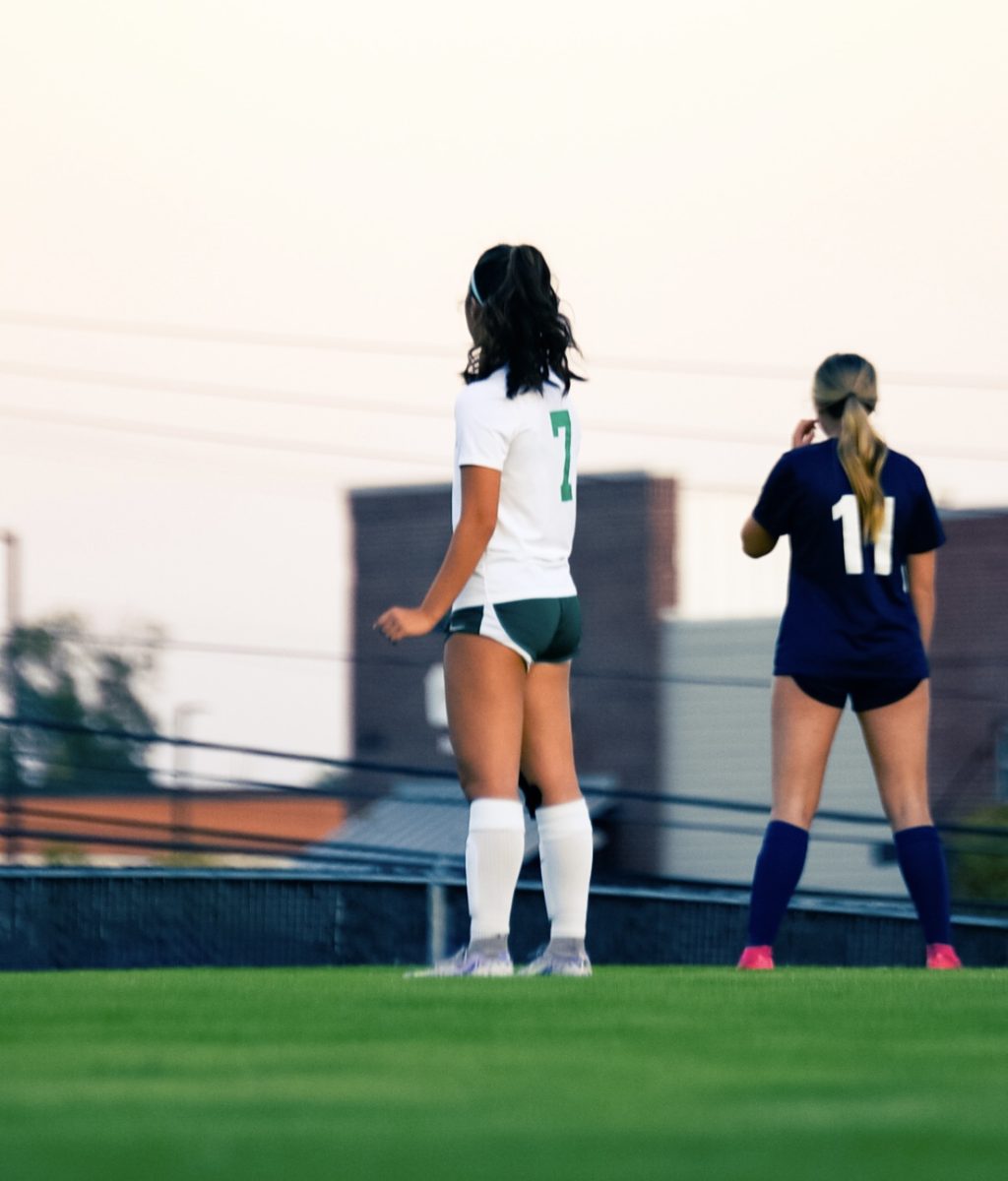
It is imperative for high school athletes who are planning on playing their sport at the collegiate level to understand the differences between the divisions and the opportunities that are available at each level. Abby Griffith (12) is a senior on the girl’s lacrosse team who has committed to Tennessee Wesleyan University, a NAIA program, along with Green.
“I want to keep [playing lacrosse],” Griffith said. “Since my freshman year, my coaches [have] presented [playing in college] to me as an option.”