












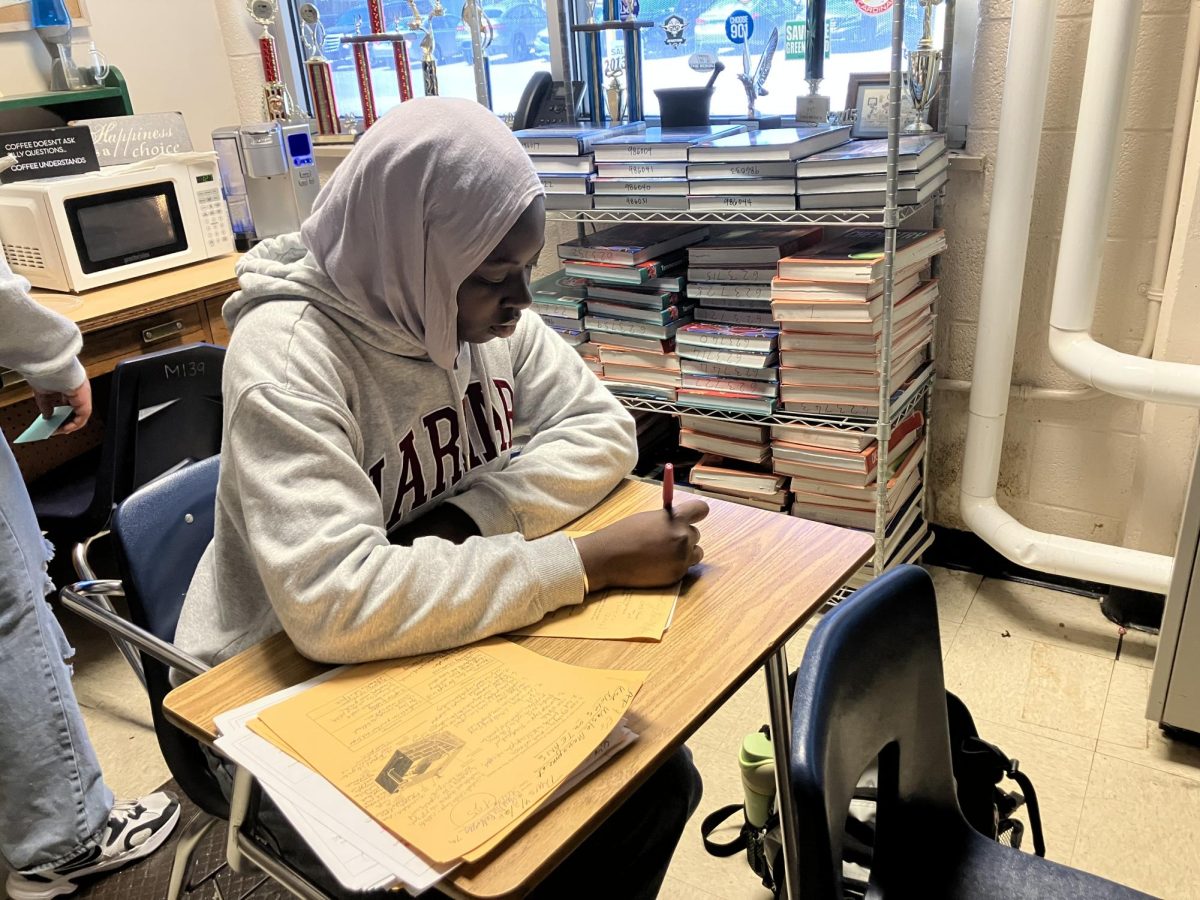










‘SWBAT learn from a curriculum IOT improve teaching’ is what the district thinks — but oversight slips and slides towards censorship, and faculty wonders if curricula are doing more harm than good.
Curricula define a teacher’s day; they mandate everything from what ideas to teach to what books to assign. Some teachers, like those who teach Creative Learning in a Unique Environment (CLUE) or Advanced Placement (AP) classes, have more autonomy. However, all teachers have some level of oversight governing their classroom.
These plans come from the district, are slightly personalized by the school and then are taught by the teachers. However, the decision making at the district level is often opaque, and long-time CLUE teacher Rob Wade questions who is really creating these lessons.
“We don’t have experts deciding [curricula],” Wade said. “Well, [experts] are very expensive and rare and difficult to find. Plus, there’s something else. In order for me to recognize somebody who’s really pro at it, I have to have the ability to recognize them. If I’m just your average bear deciding curriculum at the district level, that’s pretty big wishful thinking to think that I could provide the architecture of a curriculum guide.”
Beyond questions of the quality of curricula, their lack of flexibility can also become an issue. Even the best plans cannot account for every possibility, and with an art form like teaching, a formula will not be effective.
“We’ve lost and continue to lose teachers, people who are born teachers, because they’re not given the freedom to thrive,” Wade said. “They go and get degrees, and they’re highly educated, and this is their love and passion … [then] they come to public education, and they’re given a script.”
However, not all staff see curricula the same way. Alberta Coats was an English teacher for 17 years before becoming White Station High School’s (WSHS) instructional facilitator over English. She finds that curricula are more about helping teachers find their way through often complicated learning requirements than about controlling them.
“The reason it’s a curriculum guide—it’s a guide,” Coats said. “It’s supposed to guide us throughout the year.”

Curricula are not the only elements of learning and exposure of materials that the district oversees. In the library, various laws and policies are being put into place to ensure that every book is acceptable by the district’s standards. One recent state law, the Age Appropriate Materials Act, requires school libraries, and later individual teachers, to list every book in their collection. Stephanie Carr, one of WSHS’s two librarians, notes that the rules and bureaucracy can get overwhelming.
“[The state] wanted to know not only what was in the library [but] what was in each teacher’s classroom,” Carr said. “Well, you know, that randomly changes all the time. Right? Because a teacher might go to a yard sale and pick up some books.”
However, sometimes this monitoring can be important to keep school materials appropriate. During her time as the librarian for White Station Middle School, Carr had to make similar choices about how far to go with managing what was allowed into the library.
“Librarians don’t want to remove books because we don’t want to censor things,” Carr said. “But yet, if you step back and you’re a parent … [do you] really want them reading the content that’s in that book?”
Laws, book bans, curricula, policies and lists are all attempts to organize the chaos of teaching. But not everything can fit in tidy little boxes, and many teachers find curricula restrictive.
“Everybody wants to think … that they can just create flowcharts for everything,” Wade said. “Just do this, and everything will be okay. But nothing is like that, in reality.”