


















Donald Trump arrived in Memphis on March 23 for a roundtable event organized with the November midterms in mind. Aside from its goals to curry favor with Republicans, the event also centered on Trump’s crime crackdown in Memphis via the deployment of the National Guard.
With public opinion of Trump being so controversial, the visit resonated with some much differently than others. Undoubtedly, reactions ranged from displeasure to excitement — but despite personal feelings, the visit itself was something notable for Memphis.
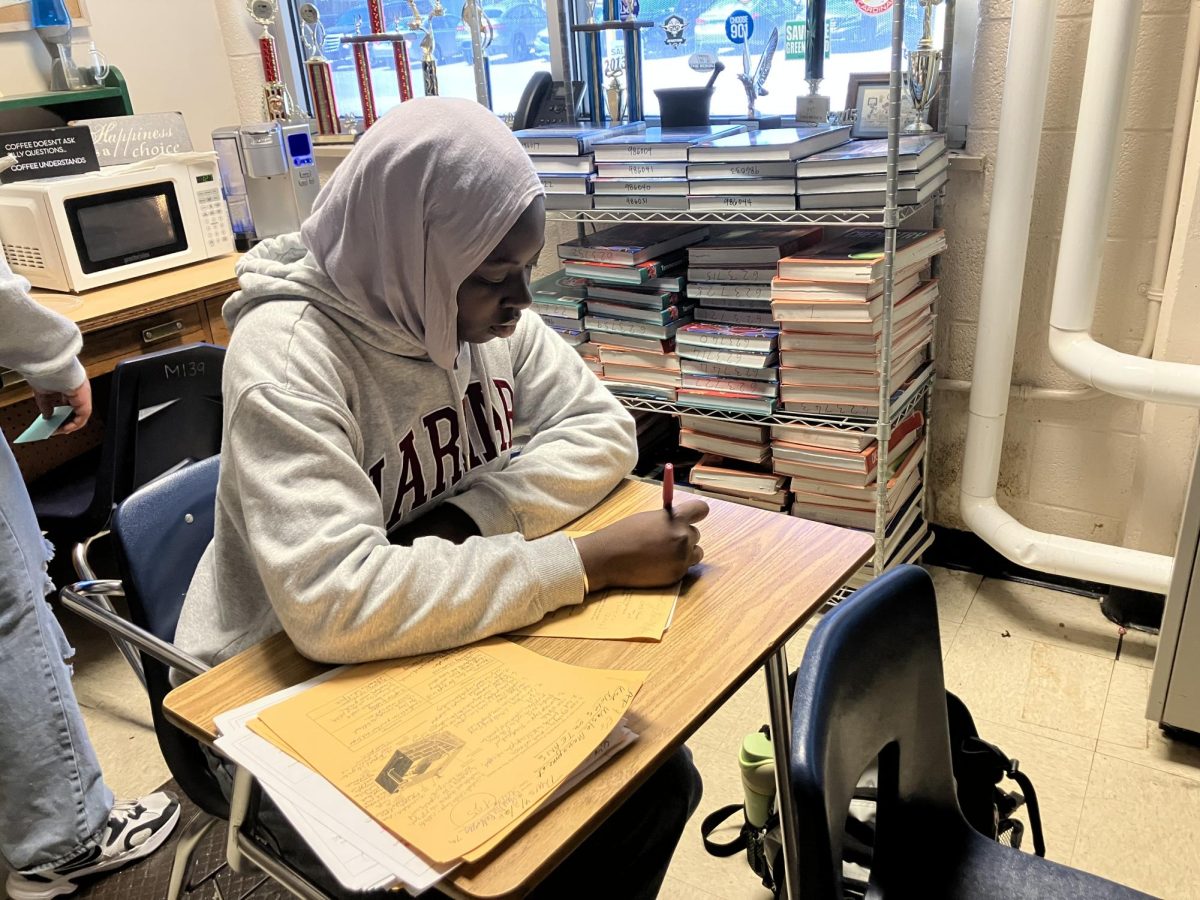
“I would say it’s not a big deal, but it’s a deal for a president to come himself instead of just staying in the White House and being interviewed,” Jonah Austin (9) said.
Some see Trump’s visit to carry relevance for yet another reason. In a president, many would like to see transparency, regardless of whether they agree or disagree with policies or decisions.
“I do feel like it’s important,” Gina Beck (12) said. “I don’t know if the citizens will receive it well, but I do think that it’s important. If he has some kind of plan or he feels like things need to change, then I feel like him as a President, instead of just forcefully putting the national guard out here, he should speak about it with the citizens.”
One such decision Trump has put into place is the deployment of the National Guard to Memphis for the purpose of managing violent crime. Since their deployment, crime has gone down 43 percent. Additionally, they have made around 7,000 arrests and confiscated around 1,100 illegal firearms since the beginning of the crime crackdown. Some see this as a positive good for the city, and for Austin, an effort that the National Guard could even improve on.
“I agree with [the National Guard]…Memphis has one of the worst [crime rates]…” Austin said. “Could they possibly do a little bit better and spread around a bit more and be a little bit more involved? Yes.”
Others acknowledge the efforts and results of the National Guard but at the same time remain skeptical of the methods through which crime is being reduced. For Beck, crime-fighting efforts raised consideration beyond just results.
“I think it’s a good and a bad thing,” Beck said. “I think the National Guard being here is a good thing for crime in Memphis … I feel like Trump is focusing on the wrong thing at hand. I feel like instead of putting [the National Guard] here to reduce crime forcefully, I feel like there should have been [a] community and National Guard partnership.”
While the impact of the Trump administration’s decision to deploy the National Guard to Memphis is no doubt beneficial crime-wise, the method of doing so can strike Memphians differently. Considering the tumultuous background of Memphians’ relationship with law enforcement, the tactic can spark fear in some.
“Because of how police brutality and the national guard are viewed, when we see the national guard we don’t think help, we think fear,” Beck said. “We don’t think that they’re here to reduce their crime rate; but if they are here to reduce our crime rate, that’s not our initial thought.”
Trump’s visit did not only come in the midst of the National Guard situation; it was also in the shadow of the war with Iran and the U.S. Immigration Customs Enforcement (ICE) situation. While not the focus of the visit, these two other concerns also influence many Memphians’ perception of Trump; for some, they are not major influences on his performance.
“Could he do better with his situation with ICE?” Austin said. “Yeah, it could possibly be a little bit better. With the Iran War, could his remarks be a little bit better? Possibly. But he’s just doing his job at the end of the day, which he sees fit.”
For others, the combination of his decisions and policies demonstrate a need for improvement. In Beck’s case, that can mean adjusting his approach to problem-solving.
“I also feel like he could pour more money and his interest into the communities instead of just bashing them. I feel like he makes no effort with the country or the states or the communities to make a difference, but he loves to forcefully make things change.”