


















Every year, the men’s college basketball season concludes with a captivating 68-team, single-elimination tournament where the winner is crowned as the national champion. The University of Michigan defeated the University of Connecticut in a highly contested final 69-63 to win the 2025-2026 national championship.
Along with watching the tournament games themselves, many people try to predict the outcome of the tournament by creating a bracket. In all of recorded history, nobody has managed to create a perfect bracket — each year there are 9.2 quintillion different possible bracket outcomes, making the chances of predicting the result nearly impossible. However, some people believe that a perfect bracket will be created eventually.
“I feel like it just has to happen eventually,” Bennett Coats (10) said. “People are getting pretty close. I think this year, on ESPN — the official March Madness bracket competition — someone broke the record. The star [players] are going to the same few teams, so I think it’s going to be easier to predict as time goes on.”
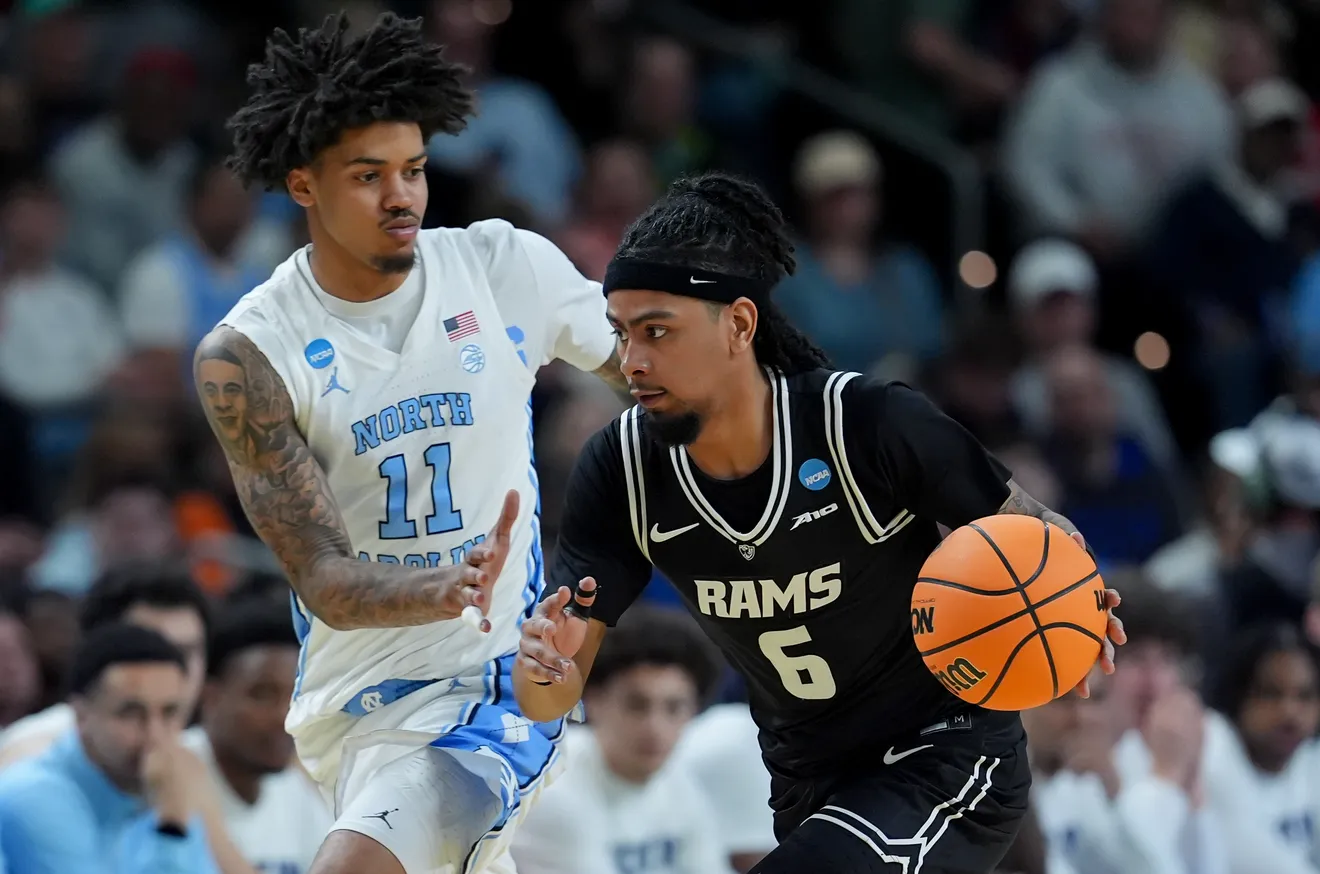
The tournament has been coined “March Madness” because of its unpredictable nature and high entertainment value. Every year, upsets happen, where lower-ranked teams defeat higher-ranked teams. These games break many people’s brackets and provide great underdog stories. This year, Virginia Commonwealth University (VCU) upset the University of North Carolina (UNC) in an overtime comeback win. Coming into the game, UNC was favored to win with their talented roster and long history of tournament success — six prior national championships wins. In the first thirty minutes of the game, UNC was in control, even leading by 19 points in the second-half, but VCU clawed back into the game and won in overtime.
“[My favorite moment of the tournament was] probably when VCU upset UNC,” Coats said. “That was a legendary performance.”
From upsets to deep tournament runs, there are many factors that play into having a successful March Madness team. Aspects such as coaching, defense, rebounding, experience and talent are all thought to be important to success in March Madness.
“[The most important thing in March Madness is a] good coach,” Nathan Chi (10) said. “Good coaching staff. Good coach in general. If you have a good coach who has experience in the March Madness [tournament], they know how to draw up the plays. They know what to do in clutch moments, how to develop young talent. They know how to win, essentially.”
March Madness strategy and competition has changed a lot over the years. Through the implementation of Name, Image and Likeness (NIL) compensation, colleges can now pay athletes, and this has led to more transfer players from smaller basketball programs to established programs. Additionally, there are no limits on what colleges pay their athletes. This system has been criticized for disrupting smaller basketball programs from building strong teams and competing for championships. The University of Kentucky (UK) famously spent $22 million on their college basketball roster, highlighting the lengths large programs will go to for their basketball programs.
“Yes, I think [NIL has worsened college basketball],” Chi said. “I think that because a lot of mid-conference teams like Siena [University]’s good players might transfer to better schools like Duke, Vanderbilt, which will worsen Siena’s team a lot — [a team] which almost beat Duke.. I think that every team must restrict how much money they spend on NIL… You can’t be like Kentucky, who spent $20 million on the transfer portal, and like you still lose in the round of 32, which I just don’t think is fair.”
However, there is another side of the coin with NIL. For large and established college basketball programs with sizable NIL budgets, there is an increased capacity to build more skilled, competitive and entertaining teams, which make later tournament games more contested and intense. Additionally, even in the era of NIL, upsets still happen quite frequently.
“I think there are going to be less upsets because of NIL, but I don’t think [March Madness] will be any less entertaining,” Coats said. “Of course upsets are entertaining, but the games are still going to be good games.”