














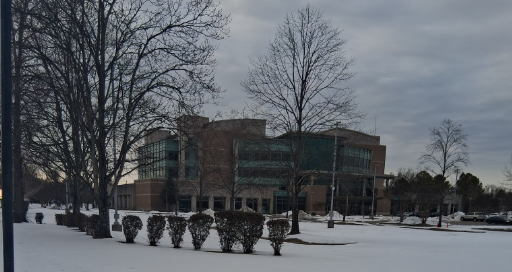
Throughout the school year, White Station High School (WSHS) students have access to all the resources within the building— those being the school’s social worker, Erin Harrington, for mental health needs, the cafeteria with its free meals and the over 100 clubs to invest time in. As the school year comes to a close, these resources will become less accessible causing some students to question what to do during the summer months. However, the city of Memphis has the needs of teens covered through government programs and nonprofits alike.
Memphis Public Libraries
There are 18 Memphis Public Library (MPL) branch locations, the closest to WSHS being the Officer Geoffrey Redd Library (formerly known as the Poplar-White Station Library). Beyond allowing people to borrow books, each library hosts community events and has opportunities for students to earn service hours. The largest MPL branch location is the Benjamin L. Hooks Central Library, which can be accessed directly from the Memphis Area Transit Authority (MATA) Bus Line. This library is also home to the Seed Library, CLOUD901 and the library bookstore.
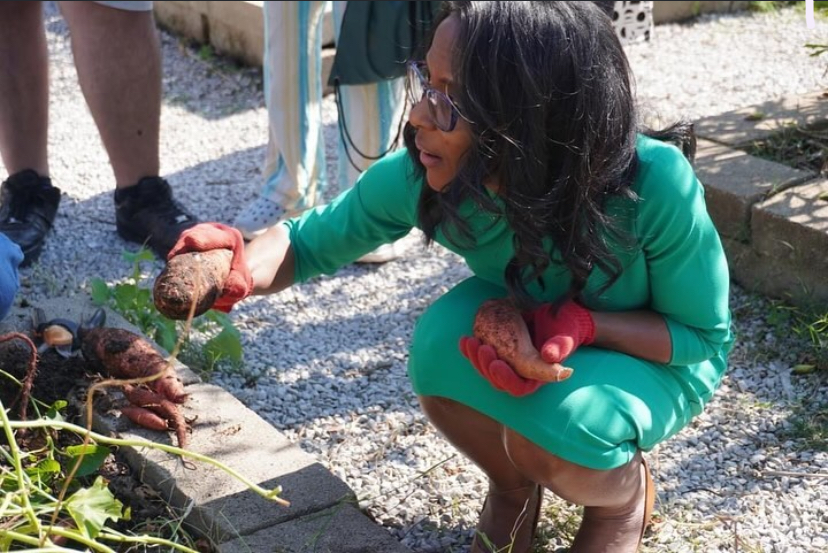
The Seed Library offers free seeds during the spring and summer for people looking to grow their own plants, like fruits, vegetables or flowers. This is an easy way for anyone to start their own garden without having to spend their money on seeds. All that is asked in return is that participants will, at some point, contribute back to the seed library to keep the initiative going.
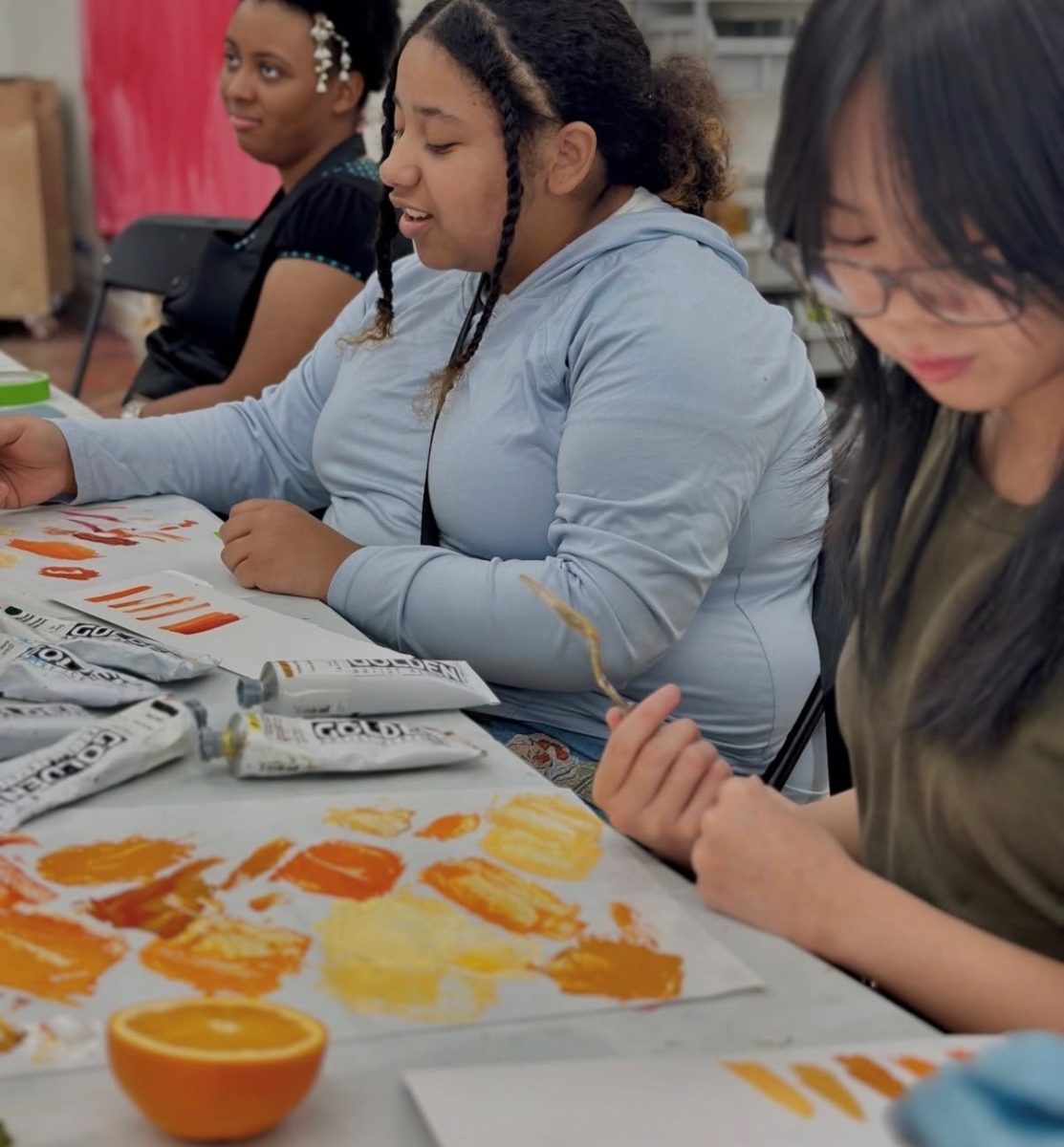
CLOUD901 is a learning lab found inside the library for people ages 13 to 18. It is run by seven staff members who are experienced in the different creative “lab” areas. The program seeks to foster youth creativity and give a space for students to explore their interests free of charge.
“CLOUD901 opens at 3:00 p.m. Teens ‘check in’ at the Front Desk via iPad, and that allows staff to track attendance,” Taylor Jackson, a CLOUD901 participant, said. “Teens can find out what is happening in CLOUD901 via our Big Calendar on the wall, scanning the CLOUD901 QR code to access our event calendar, or view the white board that is updated daily. Teens choose how they spend their time in CLOUD901, whether they attend an Art Workshop, focus on homework, or catch up [with] friends.”
The facility is divided up into “suites” each dedicated to different creative purposes. One is a Music lab with soundproof rooms for drumming and band practice, an audio booth and a mixing booth. Additionally, CLOUD901 has an art studio and a digital art studio, both set up with their own tools for teens to use for their own projects. There is also a makerspace with craft supplies, a video lab with cameras and lighting equipment and free online editing platforms. Books are also available to read on a variety of topics that teens might be interested in and are located in each suite.
“CLOUD901, and libraries in general, serve as a ‘third space’ for teens to be themselves, meet other youth from around the city, discover a new hobby and develop creative skills at their own pace,” Jackson said.
Finally, the Benjamin L. Hooks Library also offers two other special features: the library bookstore and private study rooms. The library bookstore offers books for students to buy at an affordable price and is always fully stocked. In addition, teens and adults over the age of 16 can volunteer throughout the library including in the bookstore. The study rooms are located on the upper floors and can accommodate a variety of group sizes. These rooms have tables, whiteboards and a first-come, first-serve policy.
Community Centers
The city of Memphis has 28 community centers as a part of their parks program. Each center has several amenities, such as different courts for sports, pools, walking tracks and a variety of classes for anyone in the community to participate in, all for free. Students can find their closest community center on the Memphis Parks website (memphisparks.com), and each community center has a description providing information about amenities. These centers can be an excellent place for teens to train as they provide a free resource to practice sports and have an outlet for physical activity while escaping the Memphis heat. The classes offered also range outside of sports, such as arts and crafts classes for those interested in something more creative.
Youth Connect
The Braid Foundation was founded by Cathy Emerson and Shaneika Smith in 2021 to “braid a future where everyone” in Memphis “has the knowledge, tools and support to prioritize and maintain their mental health,” according to The Braid Foundation website. Both founders had a background working in schools, which gave them credibility during their proposal to get the money needed to fund The Braid Foundation and the subsection: Youth Connect. Youth Connect is a program designed to bridge the barriers that make mental healthcare inaccessible at times to teens.
“So what we did to make sure that we have a variety of therapists for youth to pick from is we contract with independent therapists here,” Emerson said. “So we have a pool of about 20 therapists and they … have their own [offices]. So we’re the connector, right? That’s Youth Connect. So you register with us. We help you navigate that process. Like what type of therapist do you need? Do you have questions about therapists? Do you even need to have somebody help you talk to your parents about it? Like whatever that is, we’re what we’re calling a warm connection.”
By allowing youth to pick their therapists, they get a more individualized experience that can fulfill their personal needs. On their website, youth can look at different therapists’ biographies to see their experience, specialties and a bit about their personalities.
“One of the big things that we said we were going to make sure that we were going to pay therapists a quality rate,” Emerson said. “The bulk of our program would be in direct services making sure that we were removing as many barriers as possible, so making sure that we had a workforce accessible [to youth], a workforce that would be relatable to youth, and then also talking about they would have a variety of ways to access services — meaning you could do in-person, you could do virtual, or if you struggle with either one of those, we’re going to work with community partners to find sites closer to where you live so you could get to therapy.”
Outside of attending therapy sessions, there are multiple ways to get involved with Youth Connect and The Braid Foundation. For example, the nonprofit has an ambassador program, which allows anybody interested to volunteer at events. One event being planned for early October of next year will include workshops on mental health and education about different ways for students to take care of their mental health. Some of these workshops will be student-led so that the leaders of the nonprofit can hear the voices of youth.
“I would say if a youth is not ready to go to therapy, that’s OK,” Emerson said. “We’re here when you are ready, and that’s number one for me. And two, I would really emphasize that it’s [a] choice, right? Like spending the time to read through the bios, watch the videos. It’s okay. If you go to a session and you end up not really liking your therapist at Youth Connect, all you have to do is come back to us and say, ‘this isn’t a good fit’ and we’re going to … help you find somebody else.”