















A wrestler’s ballot is called up to the mat, and they put on their ankle band. After weeks of excruciating cutting, conditioning and live wrestling at practice, tournament day has arrived. The two opponents get into position, and as quickly as the blow of a referee’s whistle, the battle begins. For eight minutes, as coaches shout directions from the sidelines, the two opponents will fight, throwing each other across the mat and competing fiercely for things as minute as the positioning of their fingers on the opposing wrestler’s neck.
A wrestling match can often feel isolating — wrestlers are on the mat alone, with only themselves to blame for mistakes. The White Station High School (WSHS) wrestling team, however, emphasizes the importance of teamwork, even though wrestlers may not be competing alongside each other at once.
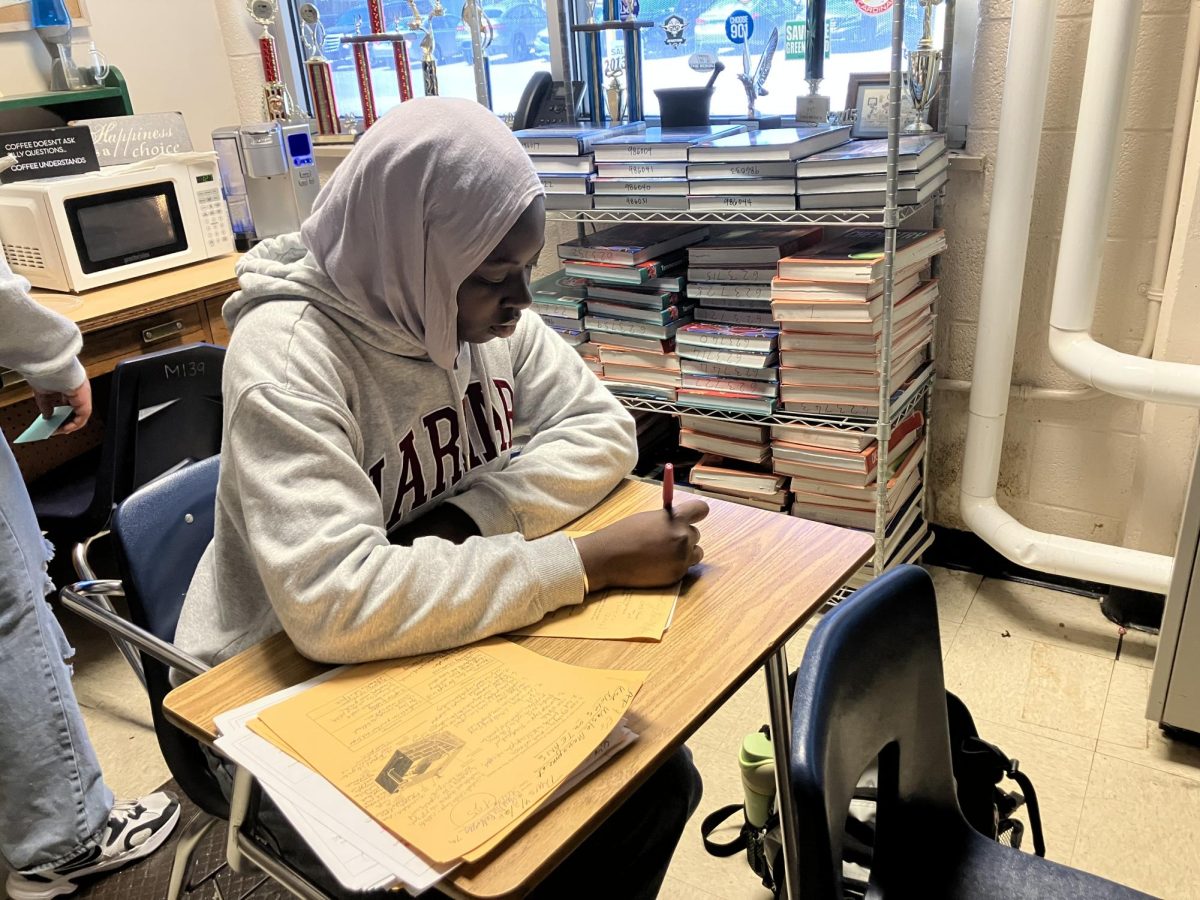
“I think the team aspect is really, really important,” Kayleigh Angona (12) said. “Because although it might be an individual sport, you can get lost in the individuality. You only improve from your teammates. Your teammates are what help build you up. And at the end of the day, it might be an individual sport, but your team can [always] help you get better.”
The demands of the season, including balancing competition, weight management, six-day-a-week training and school work, can be a heavy burden. Through having no choice but to face these struggles, wrestlers are able to build discipline to shoulder the burden.
“Ever since I started, since my freshman year, I’ve definitely been, like, able to self-discipline myself with other things besides wrestling a lot better, because simply just coming to practice takes discipline in and of itself,” Caleb Lawrence (11) said. “Wrestling took away pretty much all those nerves, and I feel more open and free to do, like, what I think is right.”
Creating moments of personal breakthrough and the overcoming of nerves for their wrestlers are a priority of the coaches, Jim Kurtz and Brenden Rye. Wrestlers are often left waiting for hours at a tournament to compete, which gives ample room for nervousness and stress to build. A strategy they employ to help combat this nervousness is keeping the records and accolades of their wrestlers’ opponents secret until after the match.
“I’ve seen some of our kids [think] ‘I don’t know if I can beat this person,’” Rye said. “And to see the joy or the adulation on somebody’s face when they have knocked off, like, you know, a state champion from a different state, or realizing that they could actually do what they said that they couldn’t do, I think that’s one of the bigger things.”
This season, Angona, unbeknownst to herself while wrestling, beat a Mississippi state champion in a match. She has gone on to place fourth in the state and now reflects on the benefits wrestling has provided her.
“It definitely helped me with my anger issues,” Angona said. “I used to take it out while I wrestled, and my coaches have definitely raised me to not just try to kill people.”
Beyond training for winning competitions and tournaments or creating championship wrestlers, Kurtz and Rye have a broader, more ambitious philosophy for the team. They see wrestling, with all of the difficulty and challenge it provides, as a way of building better human beings.
“The whole reason why I even started coaching was to develop young adults and try to make every one of the kids that are on the team just better as a person,” Rye said. “Then, like, the accolades of wrestling is neither here nor there, but, like, you come out and be a better person than what you were when you came in.”