















As teens grow up and become their own people, they have to experience the world and its ever-shifting ways. For some, this transition is difficult. According to the CDC’s “Youth Risk Behavior Survey Data Summary & Trends Report: 2013–2023,” four in 10 highschool-age students have experienced “persistent feelings of sadness or hopelessness” and two in 10 have “seriously considered attempting suicide” as of 2023. These statistics are especially high among female and LGBTQ+ students. The percentages of those feeling loneliness, depression, or experiencing suicidal thoughts have also increased significantly since 2013, leading Memphis Shelby County Schools (MSCS) to get involved.
In the summer of 2024, MSCS created the Youth Mental Health Council (YMHC) — a council made up of students, for students. Essentially, the council exists as a way to come up with new initiatives to boost school and community mental health through events, to train students on mental health through field trips and to provide peers for students to go to if they need help.
“My mental health, ever since I was in middle school, was bad, but it started to grow, and I started to see how important it was,” T’Nya Bolden (12) said. “I’ve had some friends that have harmed themselves, and I just wanted to be a part of something to prevent that. I was on the HOPE Squad, something similar to the Youth Mental Health Council, and I’ve been wanting to help students and my peers around me, because it’s very important.”
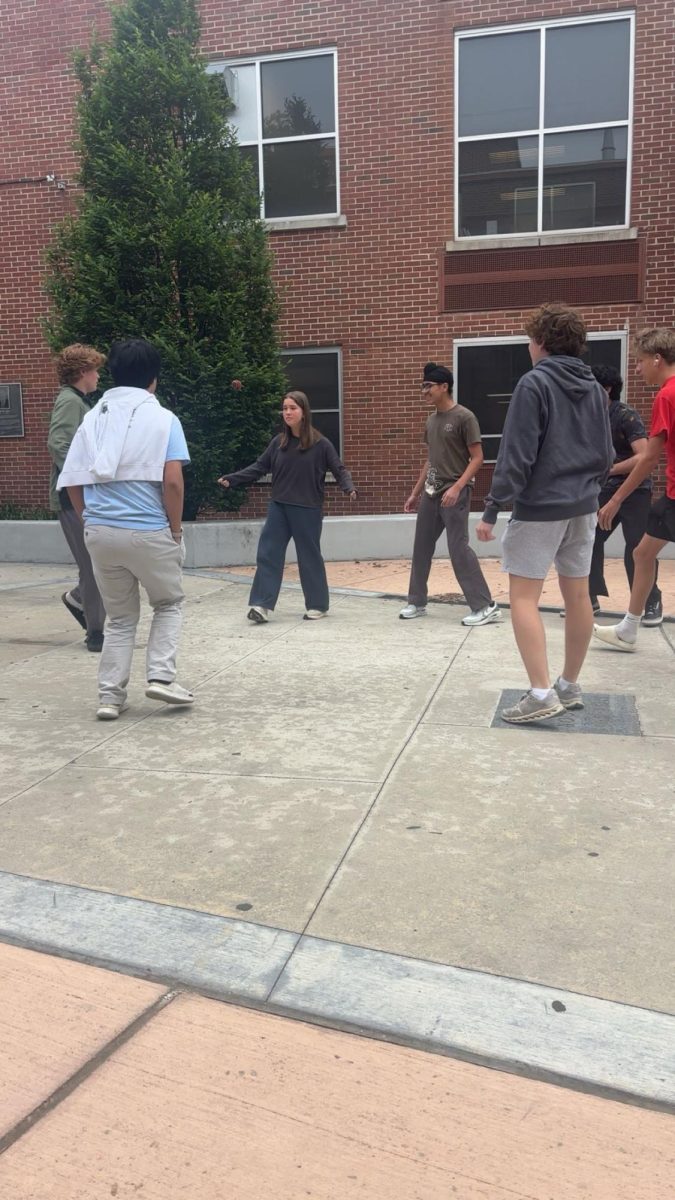
Being a new initiative, the district only requires that the YMHC meets once a week; for White Station High School (WSHS) students that meeting is on Wednesdays for thirty minutes. The council plans events, such as the mental health walk, to give students an opportunity to take a break from whatever they have going on in their lives, whether that be school troubles, home troubles or something else, and focus on the present in the scenery around WSHS. Another project the Youth Mental Health Council worked on were their Lollygrams: suckers with messages on them with the intent of improving moods of students on testing days.

“One of the projects that we’re currently working on is a [vision board because] most of the time, whenever we think about New Year’s, we think about New Year’s resolutions or of ‘new year, new me’,” Melany Mauricio (11) said. “But right now, we’re really focusing on, ‘you know what? Maybe there isn’t a new me. Maybe it’s just me. And you know what? Let’s focus on just me being me. If I’m not new, then that’s all right. If I am, then we can work towards that.’”
Students on the council get to collaborate on these projects, while supervisors take a backseat so students get to decide what would be most impactful for their peers. This collaborative safe space is formative for some, allowing them room to grow and explore the ideas they are creating and how it relates to their own and their peers’ mental health.
“The skills that I’ve learned would be better communication skills, taking your time, not rushing and having a better mindset,” Bolden said. “Learning how to stay in that positive mindset when things go wrong and looking [for] signs of when my mental health is going bad or when somebody else’s mental health is tumbling down [is important too].”
For some, the council is also a reminder to slow down. Mauricio, who takes part in JROTC and Key Club oftentimes finds herself rushing from one thing to the next. From research done for the YMHC, she has started to learn an important lesson.
“Make time for yourself,” Mauricio said. “ It’s even a sticky note that I have in the back of my phone. … Whenever I get distracted, I look at my phone and I’m like, ‘make time for yourself,’ and it makes itself my own reminder to [think] ‘You know what? I’ve been really consumed with everything and I haven’t been focusing on my own mental health.’ … So the way I make time for myself is …[making] a home-cooked meal [for myself] and really take into consideration what’s in this meal and really take a moment to myself of like, ‘I made this meal, and [I can be] very proud of that.’”
As a part of being on the council, students can participate in field trips to various conferences. There, speakers share personal stories and expert advice on mental health and offer resources for students to take back to their schools. Conference topics can range from depression to community violence and more. For example, one conference the YMHC attended was titled: “The Silver Lining: Building Resiliency After Trauma,” where Mi’Angelo Taylor, a motivational speaker, spoke at the Memphis Shelby County Schools Mental Center. Some found the sessions helpful, not only from the information contained in them but also the community involvement.
“[It was] kind of crazy to, like, to see how many students, you know, aren’t yet council members, but are striving to be,” Mauricio said. “And coming to the conference, it’s a huge commitment because you’re basically stating that, ‘Hey, I actually really do care about mental health and I want to participate in helping out my community.’ That in itself is just a huge statement to say. The conference was basically about … meeting different new people and sharing your own experiences of how you deal with your own mental health.”
Prior to this school year, original YMHC members took part in a three-day summer workshop program. At the workshop, they received a three-year certification in youth mental health first aid. Erin Harrington, the school social worker and supervisor of the council, was there to help guide students through the workshops.
“[The summer workshop was where] students [started] learning about community service and planning,” Harrington said. “We had this core group of individuals from Cordova [High School], White Station [High School] and Central [High School]. It’s opening this summer to all of the district high schools. The purpose for the summer initiative is for students to come learn some core things about mental health awareness, resources, warning signs, triggers, how to respond so that they can go back into their schools and become a member of their own mental health council and share those things out so that we have a further reach for the student.”
Although highly qualified in mental health, Harrington takes a step back when it comes to the council, letting the students make the decisions on what they want to focus on. Initially, council members were those recommended by teachers, but now anyone interested can choose to attend meetings permitting they are ready to collaborate and learn.
“We have a pretty strong group of students,” Harrington said. “They came strong with initiative and things of that nature. But there have been some dynamic shifts, not necessarily individually, but because certain students joined, there is more cohesion, I believe.”
Ultimately, the Youth Mental Health Council serves to provide more faces for the students of WSHS to talk to if they need anything. In a world where the government cuts funding for youth mental health resources, there is free counseling right in the school. In a world where more teens are becoming part of the percentage feeling hopeless, there are friendly faces in student services. In a world where everything can feel like too much, there is someone to take a walk with you until you can breathe.
“From elementary [school] through 12th grade across the nation, mental health needs have increased significantly over the years,” Harrington said. “And now, with things being where they are, with external factors, home dynamics, friendship dynamics, social media all these things; I think it is imperative that we work together with our students to not believe that the adults in the room have all the information or know what’s best, but that we trust that our students are actually the experts on their own experiences. And so being that the Youth Mental Health Council is a new initiative, I look forward to how it can grow if the school continues to align and we continue to align with students to assist with growing individuals who are mentally sound and are aware of mental health resources [so] that we can reach more students.”