







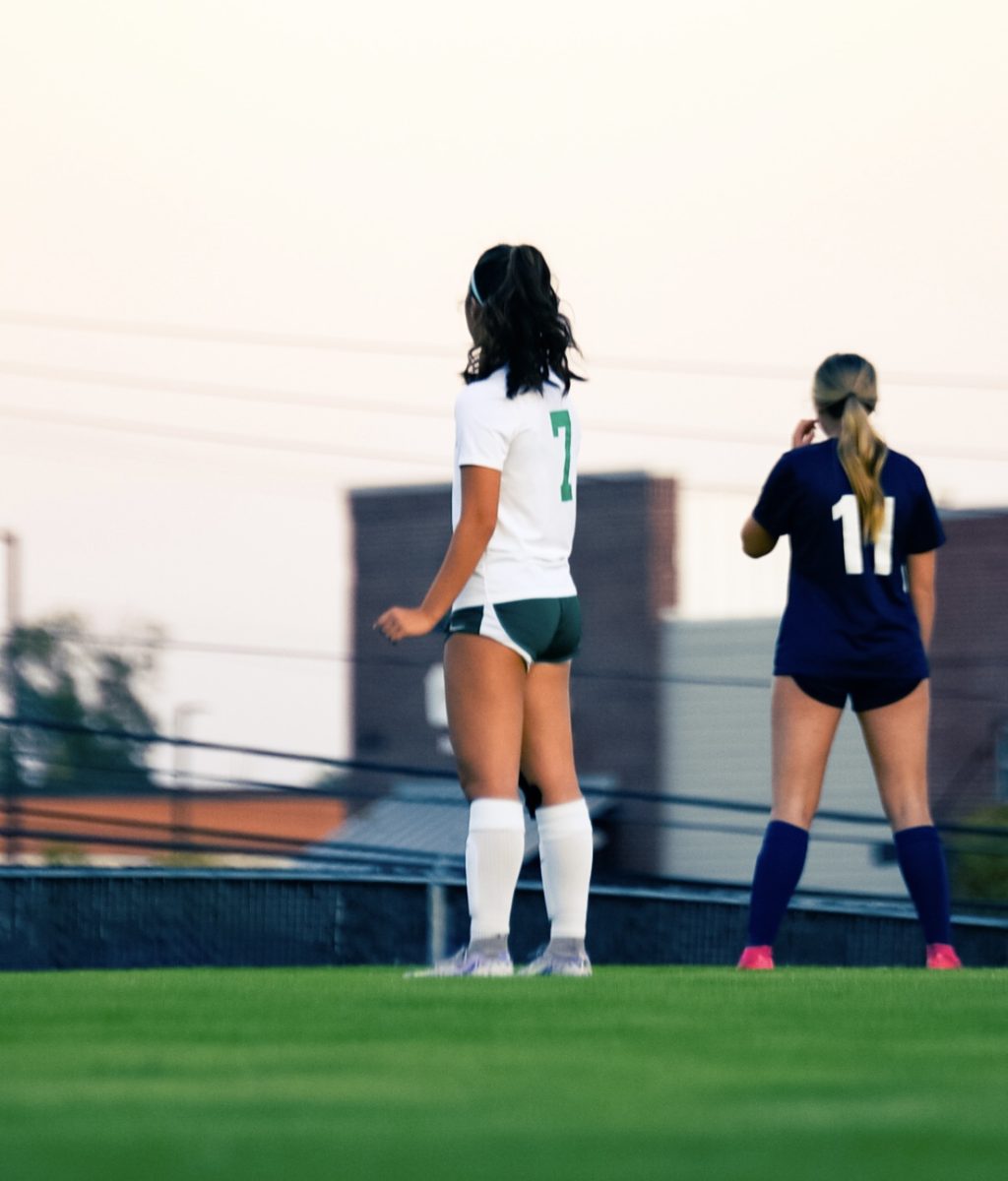













The gym is a symphony of squeaking shoes, rhythmic cheers and the thundering “thwack” of the volleyball, but beneath the jersey and the sweat, a much quieter, more intense game is being played. It is a match of mental stamina where the opponent is not the team across the net, but the pressure within. For outside hitter Cassidie Davis (11), the secret to performance is found in the rituals and psychological “resets” that keep her grounded when the stakes are at their highest.
The mental preparation for a match begins hours before the first serve. Davis finds her center through a unique combination of spiritual grounding and specific physical habits that signal her brain that it is time to compete.
“Usually, if I’m really nervous [before a game], I’ll listen to gospel music, or I’ll eat applesauce,” Davis said. “I eat applesauce before every game.”
But once the game begins, the challenge shifts from managing nerves to managing mistakes. In a sport as fast-paced as volleyball, dwelling on a missed block or a serve into the net can create a domino effect of errors.
“I have to realize that it’s normal to make mistakes,” Davis said. “I can’t dwell on a mistake, because if I know I dwell on the mistakes, I tend to make mistakes again.”
The intensity of focus often scales with the level of the opponent. Davis describes a flow state where the outside world disappears and only the game remains.
“If we’re playing a team who’s not that good, I just go with the flow … but if we’re going up against a team that’s really strong, and we know it’s gonna be a competitive game, I’m locked in,” Davis said. “I’ll generally reach a flow state.”
However, this intense focus can be a double-edged sword, making it difficult for student athletes to flip the switch back to normal life once they leave the court. The mental load of the sport can follow them into the classroom, where the replay of a game can overshadow a lecture.
“Sometimes, when I’m at school and I’m going through a mental block from my sport, it’s all I can think about,” Davis said. “I find myself distancing myself from actual school, and it strains [my focus in] school.”
When the weight of mental blocks becomes too heavy to carry solo, a support system becomes necessary. Whether it is a conversation with a parent or a small gesture of solidarity from a teammate, the psychological “safety net” provided by others helps prevent an athlete from spiraling.
“I tell some teammates when I am getting too in my head,” Davis said. “On the court I’ll tell them how I’m feeling … , and they will try to calm me down or squeeze my hand and reassure me.”
Davis has learned that her value is not solely tied to a win-loss record. Her final advice to the next generation of players is a reminder that the healthiest way to survive the pressure of high school sports is to maintain an identity that thrives both on and off the court.
“I would say don’t make your whole life about volleyball, because it eventually will catch up to you mentally,” Davis said. “Just remember your ‘why’ so you don’t lose track of your love for the sport.”