






















Each week, a family goes to the same grocery store and pays for food with their Supplemental Nutrition Assistance Program (SNAP) card. But the first week of November, just as they were about to pay, their card declined. Not because they spent all their benefits, but because SNAP had cut off, leaving them stranded at checkout. When they looked for alternatives to keep food on the table, White Station High School (WSHS) students stepped in to help.
After disagreement over a funding bill, the government shut down on October 1st. This led to a lack of funds, effectively cutting off SNAP benefits on Nov 1st. The Lindenwood Christian Church Mobile Food Bank, which loads families’ trunks with food each month, experienced above-average demand in October as families prepared for a month without the money necessary to buy food from the grocery store. Jules Thomas (10), a member of Key Club, volunteers there every other month.
“I went [to Lindenwood] … right after the government shut down, and they had more cars than we’d had in the past,” Jules Thomas (10) said. “Also, the workers there have said that there’s … this one family that shows up at midnight, and the drive actually starts … at 8:30 [a.m.], so it shows that the demand is high.”
The media coverage on the government shutdown highlighted emergent needs as SNAP benefits disappeared. However, struggles with food at WSHS are nothing new.
“There’s been a lot of talk about food drives since the government shutdown,” Professional Learning Coach Tara Bone said. “So everybody has become aware of something that’s actually an everyday challenge for about 700 of our students.”
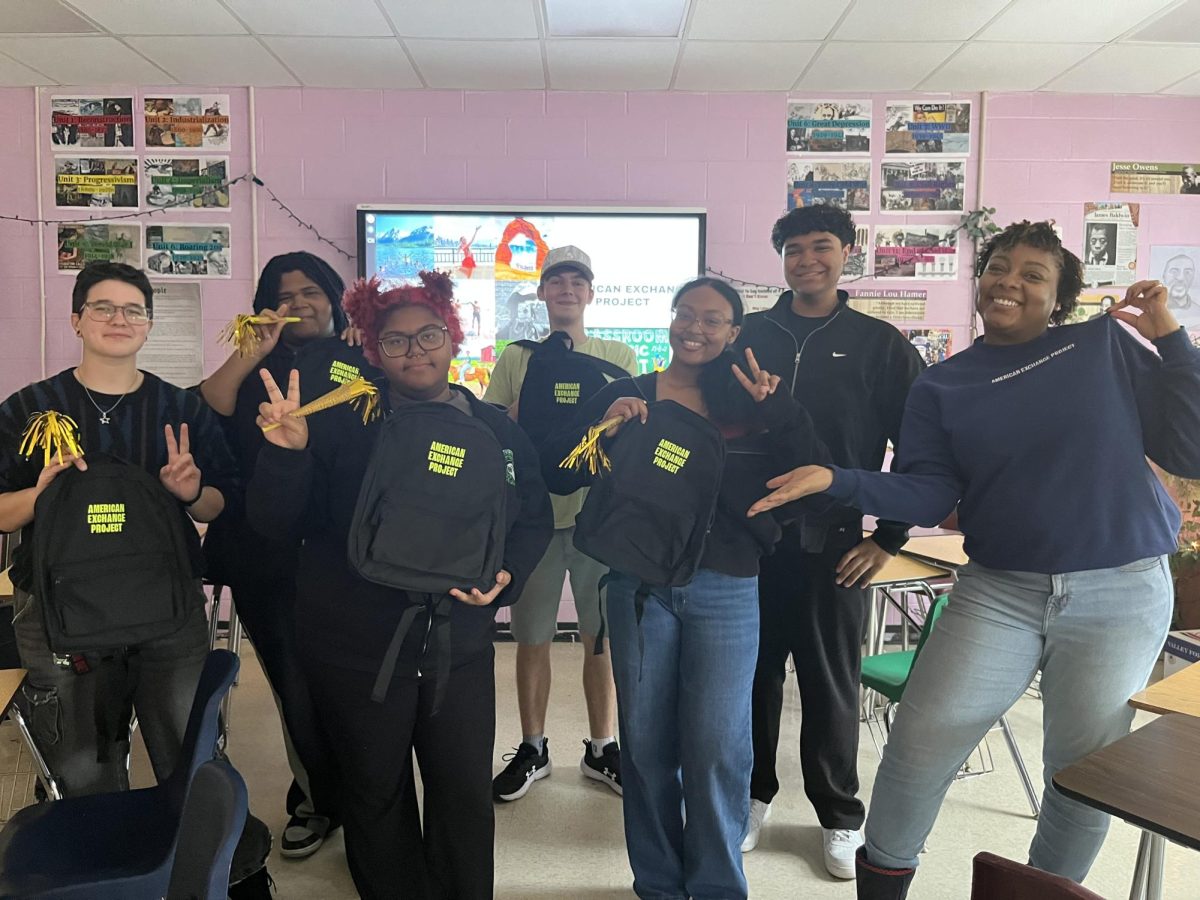
With increased attention comes increased action. This year at WSHS, in addition to Key Club’s annual drive, other groups joined in to organize food drives around the school. Bone’s job puts her in charge of Title I, a federal program which provides additional funding to schools with low-income students. It provides the more essential and basic things students need like backpacks, hygiene products and food. This meant that when it came time to do food drives, she set up the email chain to help organizers work together.
“We have multiple different groups that all want to do a food drive right now,” Bone said. “We are trying to make sure that we have one unified response, so we have social studies working on the food drive. [The Key Club sponsor] Ms. Kirby does hers that she does every single year that goes along with her math project. The sports teams and everybody else wants to do different food drives.”
The Key Club drive invites teachers to participate by allowing their students to donate. Crystal Davis, who primarily teaches chemistry, offers five extra credit points on any assignment to students who participate. She found that the drive was a chance to teach real-world concepts to her students.
“I have to discuss it … with my students,” Davis said. “We discuss food insecurity. We discuss the need for donations to the food bank. We discuss the type of food, the non-perishables, that the food bank will accept.”
Students who participate, whether volunteering or donating, get to learn about people different from themselves and put their own struggles into perspective.
“The Lindenwood Food Drive … makes me realize that I have been given a lot, and because I’ve been given a lot, I want to give back to others,” Thomas said. “And also the smiles when they get their food, because maybe it’s something they didn’t expect, or it’s something they really like. I like seeing the smiles on their face.”