























You can’t run a car without gasoline, and you can’t run a brain without food. But food, including the lunches some students pack for school, can be expensive. So, according to Cafeteria Manager Martha Hill, one in four students at White Station High School (WSHS) wait in a dozens-long line, choose from a few food options and punch in their student number at lunchtime — all without paying anything.
For many students, finding the time to pack a lunch is difficult, especially with homework, clubs and sleep to plan around. Cafeteria food offers a convenient alternative that does not need to be carried around all day.
“I wake up way too early in the morning, and I have to go to bed really early to get here,” Nadia Wright (9) said. “If I don’t eat breakfast here, I just don’t eat breakfast.”
Memphis Shelby County Schools (MSCS) is unusual for a school district in that it does not charge for school lunches, although some students think this policy should be more common.
“I don’t think that having kids pay for their lunch is ethical,” Zariya Scullark (11) said. “A lot of kids won’t be able to pay for lunch every day … Free lunch should be a right for kids. So taking that away would just kind of leave a lot of problems for the kids who can’t pay for lunch.”
Under the National School Lunch Program, families who earn under 185% of the poverty line qualify for reduced-price school lunches, and those who earn under 130% or already receive Supplemental Nutrition Assistance Program benefits get free lunches. The poverty line depends on household size, so, for example, a family of four earning under $59,478 would qualify for reduced price, and under $41,795 would get free lunches. According to the Memphis poverty fact sheet, Memphis has the highest child poverty rate among large cities in the US, so it was simpler for the district to ditch charging for meals altogether.
“[MSCS] started feeding all the children free because of the demographics and the makeup of the children in most of the … Shelby County Schools,” WSHS’s Cafeteria Manager Martha Hill said. “They say that they were under the [national guidelines] in the poverty level, and that’s why they started giving the students their meals … All the children couldn’t pay for their meals, so they just offered it to everybody for free.”
However, MSCS still has to fund lunch somehow, which is where the state comes in. The state has nutrition requirements for each meal, and if those are met, they will pay for it. But if they are not met, the school district is not reimbursed. These requirements are why cafeteria staff tell students to grab more or different food items.
“You have an entree or alternate,” Hill said. “You have a fruit or vegetable or milk. You have five entrees that you can choose from, but the students only have to choose three in order to make it a reimbursable meal, and the reimbursable meal is what the state pays us for.”
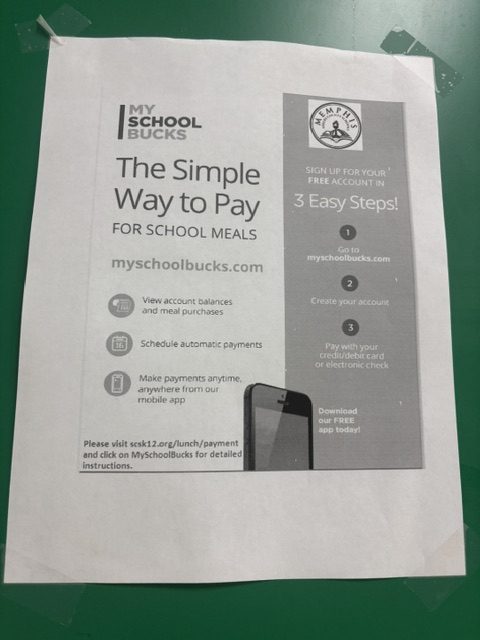
Recently, Hill hung posters outside cafeteria entrances advertising a new way to pay. These posters are her method of compensating for those meals that are not reimbursable; she needs the student to pay what the state will not.
“If I just give out peanut butter sandwiches and milk, that’s not a reimbursable meal and I don’t get paid for it and I don’t get credit for it and I’m losing my money,” Hill said.
If MSCS stopped providing lunches, students predict adverse effects in learning. It is hard for students to pay attention in class on an empty stomach.
“That’ll lower grades because people can’t f—— think because they’re hungry,” Wright said. “I know I can’t think properly when I’m hungry.”
The future of MSCS school lunch funding is less than certain. Changes are already coming to surrounding suburbs.
“I think it’s [moving] towards some students having to pay for the foods,” Hill said. “I do know that several other schools — Germantown, Collierville, Arlington, Bartlett — they already pay for their meals.”