





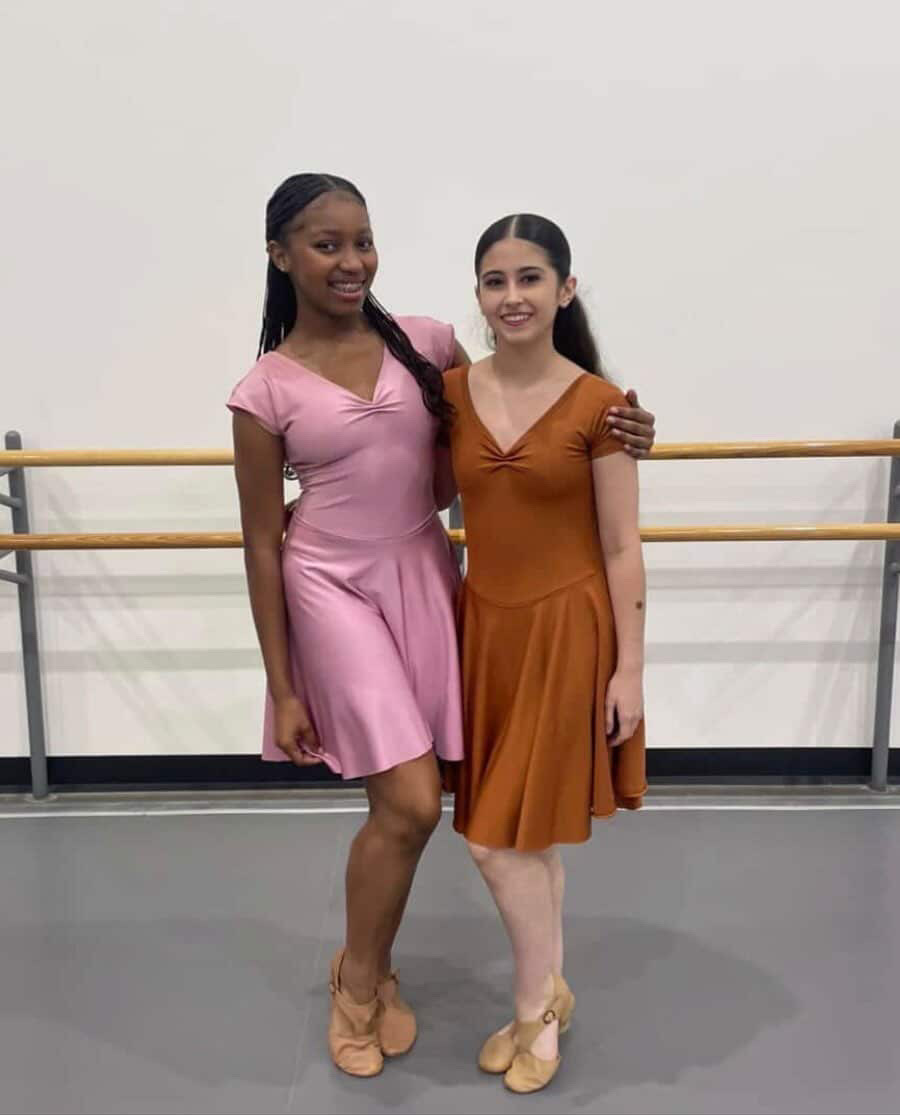












It started when she was 5 years old. Ollie Hale’s (12) parents had taken her and her sisters to see the Nutcracker, and when she saw dancers soaring through the air to Tchaikovsky’s dreamlike score, she made it her dream to fly too. 12 years later, Hale still carries that dream with her, placing first in five regional and national competitions.
Ollie Hale (12) dances with Espirit de Corps studio on a team and individually. Although Hale specializes and competes in contemporary dance, she also practices various dance styles including ballet, jazz, tap, lyrical and acrobatic. Hale spends at least 16 hours a week in the dance studio practicing her craft and preparing for competitions.
“[I love] just how free [dance] feels, how much emotion can be put into it without me having to really try,” Hale said. “Dance is my main go-to when I have emotions to get out. It feels just so relaxing to me in a way.”
Dance, especially at the national level, is competitive, and dancers are often faced with opponents who have more talent, experience or resources.
“The hardest part in dance is probably overcoming the thought of what other people are doing,” Hale said. “[It] kind of ties into competitions, but dance is such a hard world to be in. It feels like there’s always someone better than you. I have to work twice as hard as [someone] who’s next to me just to make sure that I’m at their level.”
Hale hopes to study dance in college and pursue careers in dance. Being involved in musical theater and the White Station High School (WSHS) Thespian Society, she is most interested in dancing on Broadway.
“My favorite thing about dance is being able to tell stories through dance,” Hale said. “And that’s such a heavy part of Broadway that I feel like it’s more important. Like, of course I could go choreograph for a music video or something like that, but that doesn’t feel as strengthening as choreographing for Broadway or joining a ballet company does to me.”
Dance occupies a unique space in the athletic and artistic fields, with many debating whether it belongs in one or the other. On one hand, dance requires intense physical activity, and in competition, dancers’ success is measured by how well they can carry out physical activity in comparison to their competitors, in the same way that many athletes are judged. On the other hand, dance includes elements like creativity that are unique to art.
“I think dance is both an art and a sport,” Hale said. “Because if you’re dancing competitively, obviously you’re training [for] extensive hours because you know you’re going to have to fight against other girls for your place in the competitive dance world … For competitive training, you’re training essentially the same as any other athlete in high school is.”
The emotional and passionate aspect of dance is important for Hale. It is able to function as a release for her.
“I get really heated really fast,” Hale said. “But with dance, I’m able to convey my emotions … and it’s relaxing in a way. And it lets me let go of things. I can have a dance that’s really thrashy and kind of exploding, and it makes me feel better because it feels like I’ve gotten my emotions out in that sense, instead of letting them simmer.”