

















The door to E207 opens and enlightened students, completed graphic organizers and annotated poems fly out. Eager discussion oozes into the hall, fills the gaps of misunderstanding and awakens sleepy seniors.
Advanced Placement English Literature and Composition (AP Lit) is the fictional sister of AP English Language and Composition (AP Lang), just with much less rhetoric and more figurative language. Rather than real people doing real things, authors of AP Lit books make meticulous choices and send jolts of underlying meaning flying across the lines. It is those choices that AP Lit and English II teacher Alison Hollis looks for when assigning reading.
“When I’m doing any text, I’m trying to make sure that it’s a good fit for AP Lit, so it’s rich in craft,” Hollis said. “I’m also thinking about whose voices are we hearing to make sure that it’s not dominated by one type of voice.”
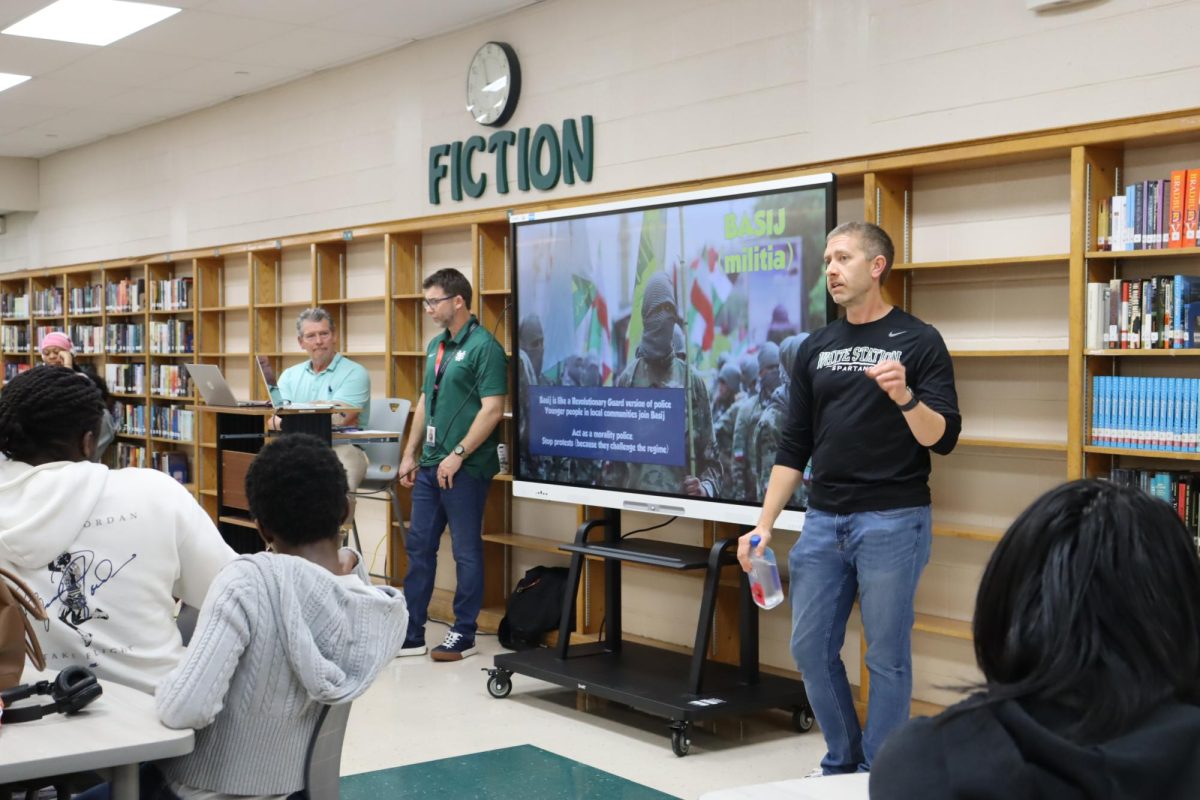
Hollis selects books that follow a theme for every quarter: identity and culture in the first quarter, tradition and rebellion returning from fall break, love and relationships in the third quarter and war and conflict in the final race towards summer. When Hollis chooses books within the theme, she plans for vibrant discussion of their meanings and choices.
“I think [Hollis] assigns the books because she knows that we’ll be entertained by [them] and she knows that we’ll get something from it,” Gregory Taylor (12) said. “I have seen either how our decisions can have bad outcomes or how they can lead to something beautiful.”
From the first quarter’s focus on identity and culture, AP Lit students learned how the tools an author uses to convey a character’s decisions and motivations can form their identity. From Zora Neale Hurston’s Their Eyes Were Watching God, students followed the character development of the main character, Janie.
“One of the books that we had to read was Their Eyes Were Watching God, and we talk a lot about how the main character is characterized through her experiences and also how she is impacted by other characters, like how she reacts to that becomes part of her identity,” Siri Larsen (12) said.
To put the skills learned through analysis of books like Their Eyes Were Watching God, Hollis assigns stamped essays. To follow the type of revision students can expect in college, Hollis requires that each student pick a literary work from class and construct an argument from it. No prompt or question is given to guide the process, allowing students to freely roam the depths of their inquisitive minds.
“Because AP Lit really does train you to write this timed, formulaic writing … it’s not authentic literary writing,” Hollis said. “In college, most of your English papers are going to be longer pieces of writing … You get to pick any text that we’ve read in class that you would like to write about. You construct a literary argument and you defend that argument in a paper.”
A loose assignment can inspire creativity. As such, Hollis has seen a wide variety of stamped essay topics during conferences — where she reads an essay in front of the writer to give feedback in real time — including comparisons between the literature and the immigrant experience, Beyoncé’s “Cowboy Carter” and other modern compositions, as well as traditional literary analyses.
“I wrote my stamped essay on [my] choice book, which was All the Light We Cannot See,” Larsen said. “There was a motif between black and white [and] at the very end of the book, grey, which is what I talked about with their identities and how their culture shaped it or didn’t shape it.”

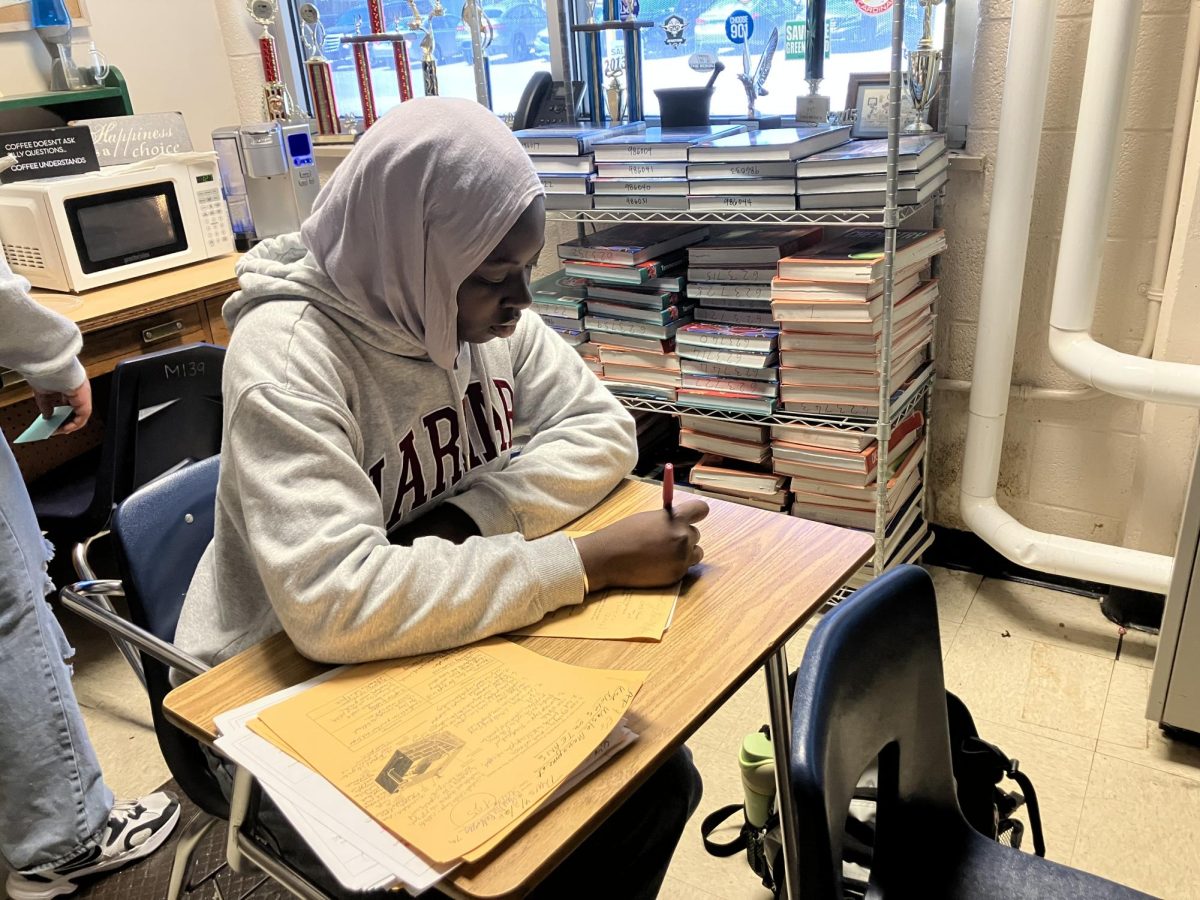
As literary choices go, the more students read, the more they see. The amount of reading in AP Lit allows students to build habits of analytical perusal. One way Hollis facilitates understanding of craft moves in literature is through graphic organizers.
“I like to see how my peers see the passage and what they interpreted from it,” Taylor said. “The graphic organizers do help me to get a better sense of the text and could help me prepare for analyzing pieces of literature in the future. To be able to recognize a contrast easier.”
Beyond developing literary skills and understanding, Hollis hopes that what she teaches in AP Lit will have applications outside her classroom. A philosophy she applies to her book selections is exemplified in a quote by Rudine Sims Bishop: “When there are enough books available that can act as both mirrors and windows for all our children, they will see that we can celebrate both our differences and our similarities, because together they are what make us all human.” Hollis hopes that her students learn to have empathy for others through the transformative experience of reading.
“I hope that my students experience one of those things [from Bishop’s quote] or more than that,” Hollis said. “That in some way they see their life reflected back at them, they experience someone else’s life or they are able to be transported to a totally different place and have a totally new experience.”